



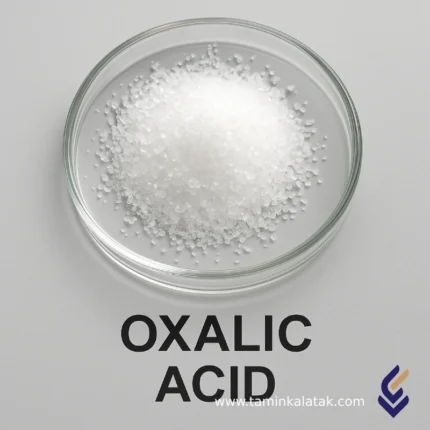
Oxalic acid
Oxalic Acid is an organic dicarboxylic acid compound with the chemical formula C₂H₂O₄, found naturally as colorless, odorless crystals. It occurs in certain plants such as rhubarb, spinach, and beetroot and is also industrially produced for use in various sectors. Oxalic acid is particularly valued in industry for its strong metal chelating ability, making it useful in cleaning, textile, leather, and pharmaceutical applications.
Structure
Oxalic acid is the simplest dicarboxylic acid.
-
Chemical formula: C₂H₂O₄ or (COOH)₂
-
It consists of two carboxylic acid groups connected directly to each other.
-
It is typically found as a crystalline solid and exists as a dihydrate (with two water molecules) at room temperature.
Properties
-
Molar mass: 90.03 g/mol
-
Melting point: 101–102 °C (for the dihydrate form)
-
Solubility: Highly soluble in water and alcohol
-
Appearance: White crystals
-
pH (aqueous solution): Around 1.3 (strong acid in dilute solution)
-
Chelation ability: Strong chelator of metal ions like calcium, iron, and magnesium
Applications
Oxalic acid is used in a wide range of industries, including:
-
Cleaning Industry: Removes rust, ink stains, and mineral deposits
-
Textile and Dyeing Industry: Used as a bleaching agent and dye fixative
-
Leather Industry: For cleaning and preparing leather surfaces
-
Chemical Laboratories: As a standard reagent and chemical agent
-
Pharmaceutical Industry: In certain drug synthesis and raw material purification
-
Wood Industry: To lighten wood color and remove metal stains
-
Beekeeping: Used in controlled applications to combat Varroa mite infestations
Disadvantages
-
High toxicity: Ingestion or skin contact can be dangerous
-
Corrosive nature: Causes irritation to skin, eyes, and respiratory tract
-
Environmental impact: Improper disposal can harm aquatic environments
-
Risk of kidney stone formation: If consumed, may lead to calcium oxalate kidney stones
Advantages
-
High efficiency in removing deposits and stains
-
Readily available and affordable
-
Strong metal ion binding capacity
-
Environmentally friendly in controlled industrial applications
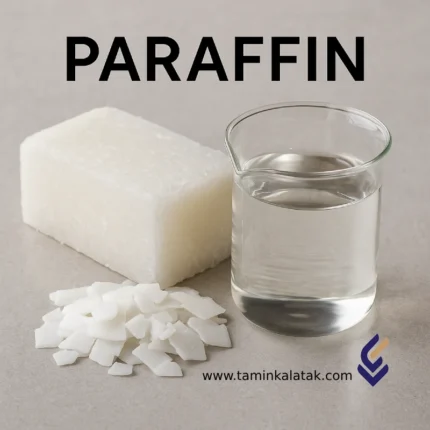
paraffin
Paraffin is a general term for a group of saturated hydrocarbons (alkanes) primarily obtained from the distillation of crude oil, and in certain cases, from coal or natural gas. These compounds may exist in linear or branched forms. Paraffin can be found in solid, semi-solid, or liquid states, and depending on melting point, purity, molecular weight, and viscosity, it is available in various industrial, pharmaceutical, cosmetic, and food-grade forms.
Types of Commercial Paraffin
Commercial paraffins are generally available in two main types:
-
Solid Paraffin – used in candle manufacturing, pharmaceuticals, and personal care industries.
-
Liquid Paraffin – also known as Mineral Oil, available in industrial, cosmetic (pharmaceutical), and food-grade forms.
Chemical Structure of Paraffin
-
General Formula: CₙH₂ₙ₊₂ (representing saturated alkane compounds with single carbon–carbon bonds)
-
Structure: A chain of carbon and hydrogen atoms with no double bonds or rings; can be straight-chain or branched.
-
CAS Numbers (depending on the type):
-
Liquid Paraffin: 8012-95-1
-
Solid Paraffin (Paraffin Wax): 8002-74-2
-
Physical and Chemical Properties of Paraffin
| Property | Description |
|---|---|
| Physical state | Liquid (oily) or solid (white blocks or flakes) |
| Color and odor | Colorless or white; odorless or very faint odor (in purified grades); lower grades may have a slight odor |
| Viscosity (at 40 °C) | 2–30 cSt, depending on molecular weight and grade |
| Flash point | 150 °C to 220 °C (higher for heavier grades, lower for light liquid grades) |
| Solubility in water | Insoluble; soluble in organic solvents such as ether, chloroform, and benzene |
| Chemical stability | Chemically stable and inert; resistant to dilute acids and alkalis |
| Biodegradability | Slowly biodegradable in the environment; industrial grades may show cumulative environmental effects |
Applications of Paraffin
Cosmetic and Personal Care Industry
Paraffin is used as a base emollient and moisturizer in creams, ointments, lip balms, hair waxes, paraffin masks, and massage creams.
Pharmaceutical Industry
Used in pharmaceutical formulations for tablet coating, suppository production, and as an excipient or carrier in topical and transdermal preparations.
Food Industry
In food-grade form, paraffin is used for:
-
Coating fruits (e.g., apples) for gloss and preservation,
-
Coating chewing gum, cheeses, and dried foods to prevent moisture loss.
Candle, Match, Paint, and Rubber Industries
Solid paraffin is used in paraffin candle production, matches, shoe polish, waterproofing products, and as an additive in rubber compounding.
Industrial Lubricants
Liquid paraffin serves as a lubricating oil in textile machinery, metalworking, and light mechanical systems.
Petroleum and Drilling Industry
Used in drilling fluids as a drill oil, anti-corrosion coating, and friction-reducing agent in drilling tools.
Advantages of Paraffin
-
Chemically inert, non-toxic, and odorless in purified grades
-
Stable under various thermal and chemical conditions
-
Skin-compatible, suitable for cosmetic and pharmaceutical use
-
Low-cost, readily available, and recyclable
-
Resistant to weak acids and alkalis
-
Long-lasting and durable in industrial applications
Disadvantages of Paraffin
-
Flammable, especially in liquid form or under high temperatures
-
Petroleum-derived origin, raising environmental and sustainability concerns
-
May block skin pores upon prolonged contact, potentially causing acne
-
Lower grades may contain impurities such as sulfur, nitrogen, or heavy metals
-
When burned, it can produce pollutants such as soot and aldehydes

Parts & Accessories (software) for…
Lorem ipsum dolor sit amet, consectetur adipiscing elit. Vestibulum sagittis orci ac odio dictum tincidunt. Donec ut metus leo. Class aptent taciti sociosqu ad litora torquent per conubia nostra, per inceptos himenaeos. Sed luctus, dui eu sagittis sodales, nulla nibh sagittis augue, vel porttitor diam enim non metus. Vestibulum aliquam augue neque. Phasellus tincidunt odio eget ullamcorper efficitur. Cras placerat ut turpis pellentesque vulputate. Nam sed consequat tortor. Curabitur finibus sapien dolor. Ut eleifend tellus nec erat pulvinar dignissim. Nam non arcu purus. Vivamus et massa massa.
Patch Buffing Machine
Lorem ipsum dolor sit amet, consectetur adipiscing elit. Vestibulum sagittis orci ac odio dictum tincidunt. Donec ut metus leo. Class aptent taciti sociosqu ad litora torquent per conubia nostra, per inceptos himenaeos. Sed luctus, dui eu sagittis sodales, nulla nibh sagittis augue, vel porttitor diam enim non metus. Vestibulum aliquam augue neque. Phasellus tincidunt odio eget ullamcorper efficitur. Cras placerat ut turpis pellentesque vulputate. Nam sed consequat tortor. Curabitur finibus sapien dolor. Ut eleifend tellus nec erat pulvinar dignissim. Nam non arcu purus. Vivamus et massa massa.
Patch Cementing Machine
Lorem ipsum dolor sit amet, consectetur adipiscing elit. Vestibulum sagittis orci ac odio dictum tincidunt. Donec ut metus leo. Class aptent taciti sociosqu ad litora torquent per conubia nostra, per inceptos himenaeos. Sed luctus, dui eu sagittis sodales, nulla nibh sagittis augue, vel porttitor diam enim non metus. Vestibulum aliquam augue neque. Phasellus tincidunt odio eget ullamcorper efficitur. Cras placerat ut turpis pellentesque vulputate. Nam sed consequat tortor. Curabitur finibus sapien dolor. Ut eleifend tellus nec erat pulvinar dignissim. Nam non arcu purus. Vivamus et massa massa.
Patch Cutting Machine
Lorem ipsum dolor sit amet, consectetur adipiscing elit. Vestibulum sagittis orci ac odio dictum tincidunt. Donec ut metus leo. Class aptent taciti sociosqu ad litora torquent per conubia nostra, per inceptos himenaeos. Sed luctus, dui eu sagittis sodales, nulla nibh sagittis augue, vel porttitor diam enim non metus. Vestibulum aliquam augue neque. Phasellus tincidunt odio eget ullamcorper efficitur. Cras placerat ut turpis pellentesque vulputate. Nam sed consequat tortor. Curabitur finibus sapien dolor. Ut eleifend tellus nec erat pulvinar dignissim. Nam non arcu purus. Vivamus et massa massa.
Patch Skiving Machine
Lorem ipsum dolor sit amet, consectetur adipiscing elit. Vestibulum sagittis orci ac odio dictum tincidunt. Donec ut metus leo. Class aptent taciti sociosqu ad litora torquent per conubia nostra, per inceptos himenaeos. Sed luctus, dui eu sagittis sodales, nulla nibh sagittis augue, vel porttitor diam enim non metus. Vestibulum aliquam augue neque. Phasellus tincidunt odio eget ullamcorper efficitur. Cras placerat ut turpis pellentesque vulputate. Nam sed consequat tortor. Curabitur finibus sapien dolor. Ut eleifend tellus nec erat pulvinar dignissim. Nam non arcu purus. Vivamus et massa massa.
Perchlorethylene
Perchloroethylene is an organic chemical compound with the chemical formula C₂Cl₄. It is a colorless, volatile liquid with a mild sweet odor. Perchloroethylene has been widely used as an industrial solvent in the past due to its unique physical and chemical properties.
Due to the stability and non-flammability of carbon tetrachloride, as well as its ability to dissolve a wide range of organic materials, it is commonly used as a cleaning solvent to remove various types of impurities and stains from various surfaces. Some of the applications of PERC are as follows:
Degreasing of metal surfaces and industrial equipment
Removing soot from industrial furnaces
Insulating and cooling fluid in electrical transformers
Degassing of metal parts in the automotive industry
Cleaning of grease and paint stains in the finishing stage of the textile industry
Used in dry cleaning due to its stain-removing properties
Petroleum Resin
Petroleum resin is a natural or synthetic polymer obtained from the polymerization of hydrocarbons found in crude oil. These resins are widely used in various industries due to their unique properties such as high adhesion, flexibility, resistance to heat and chemicals.
Types of Petroleum ResinPetroleum resins are divided into different types based on the type of hydrocarbons they contain and the production method, including the following: C5 resins: Obtained from the polymerization of the C5 cut of crude oil and are used in the adhesive and printing ink industries due to their low molecular weight. C9 resins: Obtained from the polymerization of the C9 cut of crude oil and are used in the production of coatings and paints due to their high heat resistance. Dicyclopentadiene resins (DCPD): They are obtained from the polymerization of dicyclopentadiene and are used in the adhesive and sealant industries due to their high adhesion.
Properties of petroleum resinHigh adhesion: Petroleum resins have excellent adhesion to various surfaces due to their specific molecular structure. Flexibility: These resins have high flexibility and can withstand mechanical stresses. Heat resistance: Some types of petroleum resins have high heat resistance and maintain their properties at high temperatures. Resistance to chemicals: Petroleum resins are resistant to many chemicals. Solubility in organic solvents: These resins are soluble in many organic solvents, which allows them to be used in various formulations.
Application of Petroleum Resin :
- Adhesives & Sealants
- Printing Inks
- Paints & Coatings
- Rubber Compounding
- Tapes & Labels
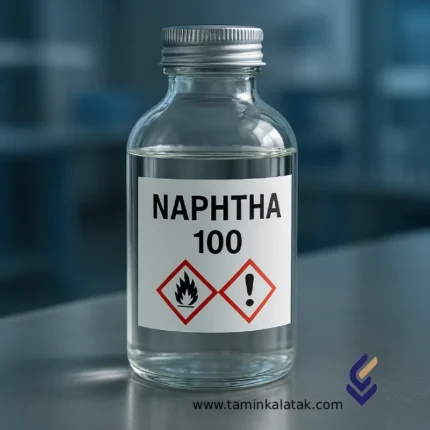
Petroleum solvent 100
Petroleum Solvent 100 (White Spirit 100) is a hydrocarbon compound derived from crude oil refining, which is used as an organic solvent with high solvency power in various industries. This substance is colorless, transparent, and has a characteristic hydrocarbon odor. Due to its suitable boiling point and volatility, it is widely used in paint manufacturing, lacquers, thinners, and industrial formulations.
Chemical Structure of Petroleum Solvent 100
Petroleum Solvent 100 consists of aliphatic and aromatic hydrocarbons with an average carbon atom count between 7 and 12. Its molecular structure lacks polar bonds, which gives it a non-polar nature. This characteristic enhances its solvency power for non-polar resins, oils, and polymers.Physical and Chemical Properties of Petroleum Solvent 100
- General Formula: Mixture of C₇–C₁₂ hydrocarbons
- Appearance: Clear and colorless liquid
- Density (at 20°C): Approx. 0.77–0.79 g/cm³
- Boiling Range: 160–200°C
- Flash Point: Approx. 40°C
- Solubility in Water: Insoluble
- Viscosity: Low, high flowability
- Odor: Mild to moderate characteristic hydrocarbon odor
Applications of Petroleum Solvent 100
- Paint and Resin Industry: Used as a diluent and solvent for oil-based and alkyd paints.
- Chemical Industries: A solvent in the production of adhesives, lacquers, and thinners.
- Industrial Cleaner: For degreasing and removing surface contaminants from metals and industrial parts.
- Coating Formulations: Improves the applicability and uniformity of coatings.
- Industrial Printing and Painting Equipment.
Disadvantages of Petroleum Solvent 100
- Emission of volatile vapors (VOCs), causing air pollution if ventilation is inadequate.
- High flammability, which requires safe storage conditions.
- Irritant effects on the respiratory system and skin upon direct contact.
- Unsuitable for materials sensitive to aromatic hydrocarbons.
Advantages of Petroleum Solvent 100
- High solvency power for a wide range of organic compounds.
- A suitable boiling range for use in industrial formulations.
- Economical price compared to similar organic solvents.
- Good chemical stability and non-reactive with many industrial compounds.
Safety and Storage of Petroleum Solvent 100
- Storage Conditions: In resistant metal or plastic containers, away from sources of heat and flame.
- Ventilation: Use in areas with sufficient ventilation to prevent the accumulation of vapors.
- Personal Protective Equipment (PPE): Use of resistant gloves, safety goggles, and a filtered mask (respirator).
- Handling and Transport: Compliance with regulations for transporting flammable materials (UN Number 1300).
- Emergency Measures: In case of skin contact, wash immediately with soap and water; in case of excessive inhalation, move the person to fresh air.
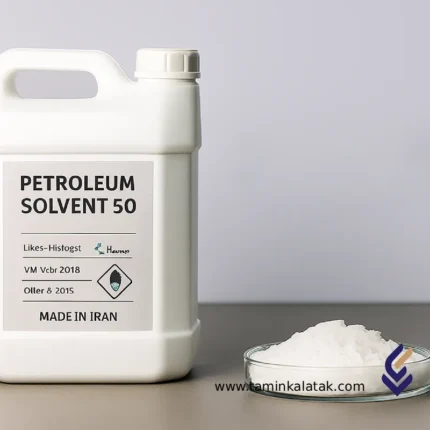
Petroleum solvent 50
Petroleum Solvent 50 is one of the most important and widely used industrial solvents, utilized in various industries due to its special physical and chemical properties. This substance is composed of light petroleum hydrocarbons and is known as a medium-boiling point solvent. Petroleum Solvent 50 has extensive applications in paint manufacturing, chemical industries, cleaning, and adhesive production. It holds significant popularity in the industrial raw materials market due to its strong cleaning power and appropriate evaporation rate.
Chemical Structure of Petroleum Solvent 50
Petroleum Solvent 50 is a mixture of aliphatic and aromatic hydrocarbons with medium-length carbon chains. This solvent primarily consists of paraffins, naphthenes, and a certain amount of aromatics. It does not have a specific or unique chemical formula as it is a composite of several different hydrocarbons, but it can generally be described as a mixture of C7 to C12 hydrocarbons. The molecular structure of this solvent provides it with strong solvency for fats, resins, and paints, while also possessing a suitable evaporation rate.Physical and Chemical Properties
- Appearance: Clear, colorless liquid
- Odor: Mild petroleum scent, not overly pungent
- Boiling Range: Approximately 140 to 220 °C (depending on the exact composition)
- Density: Approximately 0.75 to 0.80 g/cm³
- Solubility: Insoluble in water; a strong solvent for fats, resins, and many organic materials
- Flash Point: Approximately 40 to 60 °C
- Chemical Stability: Stable under normal conditions, but it is flammable and must be stored with caution.
Applications of Petroleum Solvent 50
Petroleum Solvent 50 is used in various industries due to its specific physical and chemical properties:- Paint and Resin Industries: As a solvent for thinning paints, lacquers, and resins.
- Industrial Cleaning: For cleaning industrial parts and removing grease and oils.
- Adhesive Production: As a component in industrial adhesive formulations.
- Printing Industry: In printing processes and for thinning inks.
- Chemical Manufacturing: As a reaction solvent in the chemical and pharmaceutical industries.
- Automotive Industry: For cleaning parts and degreasing.
- Textile Industry: For thinning and cleaning dyes.
Disadvantages of Petroleum Solvent 50
- High Flammability: A significant drawback is the risk of fire and explosion under improper storage conditions.
- Health Hazards: Prolonged contact or inhalation of its vapors may cause respiratory system irritation, headaches, and nausea.
- Environmental Contamination: If released improperly, it can lead to the contamination of soil and water resources.
Advantages of Petroleum Solvent 50
- High Solvency Power: Capable of effectively dissolving various fats, resins, and paints.
- Controlled Evaporation: It has a slower evaporation rate than lighter solvents, which makes it easier to work with.
- Cost-Effective: It is more economical compared to similar solvents.
- Equipment Compatibility: Less likely to cause corrosion or damage to industrial tools.
- Wide Range of Use: Highly versatile in various industries due to its composite nature.
Safety and Storage of Petroleum Solvent 50
Adhering to the following points is essential for the safe use of Petroleum Solvent 50:- Storage in a cool, dry place: Must be stored away from heat sources and open flames.
- Adequate Ventilation: The work environment must be well-ventilated to prevent the accumulation of vapors.
- Use of Protective Equipment: Such as gloves, safety goggles, and appropriate respirators to prevent direct contact and inhalation.
- Keep away from oxidizing agents: Contact with strong oxidizing materials must be avoided to reduce the risk of unwanted reactions.
- Proper Handling and Transport: Use standard, sealed containers resistant to leakage and evaporation.
Pharmaceutical Dibasic Sodium Phosphate
Pharmaceutical Dibasic Sodium Phosphate is a chemical compound with the formula Na₂HPO₄ that is widely used in the pharmaceutical industry. Due to its unique properties, this substance plays an important role in the formulation of drugs.
Properties of Dibasic Sodium Phosphate in PharmacyPH Adjustment: One of the most important applications of DSP in pharmacy is to adjust the pH of pharmaceutical solutions and formulations. Proper pH is essential for the effectiveness and stability of many drugs. Buffer: DSP acts as a buffer and reduces pH changes in solutions. This property is especially important in formulations that are pH sensitive. Drug Carrier: DSP can act as a drug carrier and help improve the absorption and distribution of drugs in the body. Increase Solubility: In some cases, DSP can help increase the solubility of poorly soluble drugs.
Dibasic Sodium Phosphate Applications in PharmaceuticalsInjectable Formulation: DSP is used in injectable formulations to adjust pH and improve drug stability. Oral Formulation: It is used in oral formulations such as syrups and suspensions to adjust pH and improve taste. Rinse Solutions: It is used in contact lens rinsing solutions and other hygiene products. Antacid Production: It is used as an active ingredient in some antacids.
Advantages of Using Dibasic Sodium Phosphate in PharmaceuticalsSafety: DSP is generally safe in the amounts commonly used in pharmaceutical formulations. Availability: DSP is readily available and at a reasonable price. Multiple Properties: DSP has multiple properties that make it a useful ingredient in drug formulations. Important Points in Using Dibasic Sodium Phosphate in Pharmaceuticals Purity: The use of high purity DSP is essential to ensure the quality and safety of pharmaceutical formulations. Compatibility: Before using DSP in any formulation, its compatibility with other components of the formulation should be checked. Dosage: The dosage of DSP should be determined according to the type of formulation and the therapeutic goal.


