




Sorbitan monostearate
Lorem ipsum dolor sit amet, consectetur adipiscing elit. Vestibulum sagittis orci ac odio dictum tincidunt. Donec ut metus leo. Class aptent taciti sociosqu ad litora torquent per conubia nostra, per inceptos himenaeos. Sed luctus, dui eu sagittis sodales, nulla nibh sagittis augue, vel porttitor diam enim non metus. Vestibulum aliquam augue neque. Phasellus tincidunt odio eget ullamcorper efficitur. Cras placerat ut turpis pellentesque vulputate. Nam sed consequat tortor. Curabitur finibus sapien dolor. Ut eleifend tellus nec erat pulvinar dignissim. Nam non arcu purus. Vivamus et massa massa.
Sorbitan monostearate
Sorbitan monostearate, or SMS for short, is a chemical compound used as an emulsifier in various industries. It is obtained from the combination of sorbitol and stearic acid and is widely used in the food, cosmetic, and pharmaceutical industries due to its unique properties.
Sorbitan Monostearate PropertiesEmulsifier: Has the ability to create stable emulsions between oil and water. Stabilizer: Helps stabilize emulsions and suspensions. Antifoam: Prevents foam formation in products. Increases viscosity: Increases the viscosity of products. Compatibility with other materials: Compatible with many other materials.
Sorbitan Monostearate ApplicationsFood industries: As an emulsifier in the production of dairy products, sauces, chocolate and baked goods As a stabilizer in products such as peanut butter and margarine As an antifoam agent in the production of fermented products Cosmetic industries: Used as an emulsifier and emollient in lotions, creams, shampoos and cosmetic products. Used as an emulsifier and moisturizer in the production of skin care products. Pharmaceutical industries: Used as an emulsifier in the production of tablets, capsules and other pharmaceutical products. Used as a carrier in the production of some drugs. Other industries: Used in the production of paints, inks and coatings. Used as a softener in the textile industry.
Sorbitol
Sorbitol is a sugar alcohol that is naturally found in some fruits such as plums, cherries, and apples. It is also used as an artificial sweetener in many food and pharmaceutical products. Sorbitol has a wide range of applications in various industries due to its unique physical and chemical properties.
Sorbitol PropertiesSweetness: Sorbitol has about 60% the sweetness of sucrose (regular sugar). High solubility: It dissolves easily in water. Hygroscopicity: It acts as a moisture-absorbing agent and helps retain moisture in products. Low calorie: It has fewer calories than regular sugars and is therefore used in diet products. Laxative effects: Excessive consumption of sorbitol can cause diarrhea.
Sorbitol ApplicationsFood Industry: As a sweetener in diet products, sugar-free chewing gums, chocolates and other food products As a softener and moisturizer in baked goods As a bulking agent in dairy products Pharmaceutical Industry: As a solvent for drugs In the manufacture of some laxatives In the production of skin care products Cosmetics Industry: As a moisturizer in cosmetic products As a bulking agent in toothpaste
Benefits of using sorbitolNatural sweetness: It is a good alternative to artificial sugars. Lower calories: Suitable for diabetics and those looking to lose weight. Hygroscopic properties: Helps maintain the freshness of products. High biocompatibility: Suitable for use in food and pharmaceutical products.
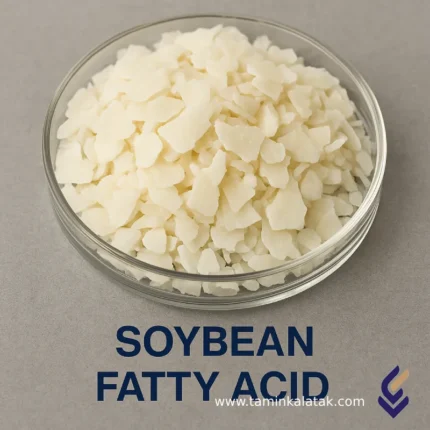
Soybean fatty acid
Soybean Fatty Acid is one of the natural derivatives obtained through the hydrolysis or saponification of soybean oil. This compound consists of both saturated and unsaturated fatty acids, which are widely used in chemical, cosmetic, and industrial products. Its main components include: Linoleic acid (≈51%), Oleic acid (≈23%), Palmitic acid (≈10%), and Stearic acid (≈4%).
Structure of Soybean Fatty Acid
The chemical structure of soybean fatty acid consists of long hydrocarbon chains with a carboxyl group (-COOH) at one end. Depending on the number of double bonds, these acids are classified into two main categories:
-
Saturated acids: such as Palmitic acid (C16:0) and Stearic acid (C18:0)
-
Unsaturated acids: such as Oleic acid (C18:1) and Linoleic acid (C18:2)
This structure provides chemical and physical properties such as lubricity, thermal stability, and emulsion-forming capability.
Properties of Soybean Fatty Acid
-
Naturally derived from a plant-based source (soybean oil)
-
A mixture of saturated and unsaturated fatty acids
-
Odorless and tasteless after refining
-
Relatively stable at normal temperatures, but prone to oxidation when exposed to oxygen and light
-
Biodegradable and considered a green alternative to petrochemical derivatives
Applications of Soybean Fatty Acid
✅ Used in the production of soaps and plant-based detergents
✅ Serves as an emulsifier in paint, resin, and food industries
✅ Used in the manufacture of plasticizers
✅ Employed in the formulation of cosmetic and personal care products such as creams and lotions
✅ Utilized in the production of industrial oils and various waxes derived from industrial fatty acids
✅ Acts as a biofuel base (biodiesel) and is used in the drying oils industry (e.g., printing ink and paint)
✅ Used in the production of epoxidized soybean oil (ESO) for resins and plastics
Advantages of Soybean Fatty Acid
-
Plant-based and renewable (unlike many petrochemical materials)
-
Eco-friendly and biodegradable
-
Cost-effective and economical
-
Diverse fatty acid composition suitable for multiple industrial applications
-
Can be converted into epoxides, esters, and biodiesel for specialized uses
Disadvantages of Soybean Fatty Acid
⚠️ Sensitive to light and oxygen; may oxidize without proper storage
⚠️ Requires refining to remove impurities (such as soap, protein, and phytosterols)
⚠️ Thermal stability fluctuates without antioxidant additives—quality may degrade at high temperatures
Price of Soybean Fatty Acid
Soybean fatty acid is one of the most important derivatives of soybean oil in various industries. Its unsaturated nature and diverse chemical properties have earned it a significant place among plant-based fatty acids.
Several key factors influence its market price:
-
Purity grade and refining quality:
Soybean fatty acid is available in different grades—industrial, cosmetic, or pharmaceutical—each with a distinct price point. -
Fluctuations in crude soybean oil prices:
Since this fatty acid is derived from soybean oil, any global changes in the soybean market directly affect its final price. -
Order volume and packaging:
Bulk purchases in industrial drums or tankers reduce unit costs, while smaller quantities or special packaging tend to be more expensive. -
Production origin (domestic or imported):
Some local manufacturers supply this material domestically, but imported brands—especially those with international quality certifications—are usually more expensive.
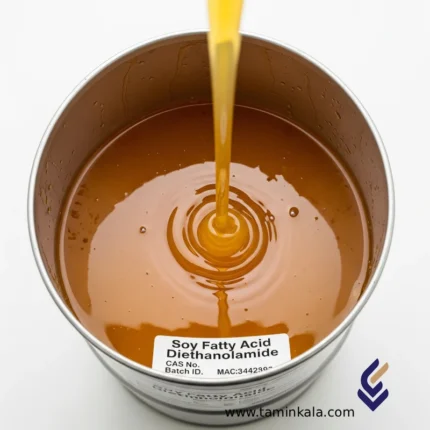
Soybean fatty acid diethanolamide
Soy Fatty Acid Diethanolamide (or DEA derived from soybean fatty acids) is a nonionic amide surfactant obtained by the reaction of soybean fatty acids with diethanolamine (DEA).
It is commonly used as a foam booster, viscosity enhancer, and secondary surfactant in detergent and cosmetic formulations.
General Formula
R–CO–N(CH₂CH₂OH)₂
where R represents the alkyl chain of the fatty acid (mainly C₁₆–C₁₈, saturated or unsaturated) derived from soybean oil.
Typical Properties of Soy Fatty Acid Diethanolamide
| Property | Typical Value / Range |
|---|---|
| Appearance | Light yellow to amber viscous liquid |
| Odor | Mild, fatty, vegetable-like odor |
| Density (25°C) | 0.95 – 1.02 g/cm³ |
| Boiling Point | > 200°C (decomposes before boiling) |
| Viscosity (25°C) | Very high (1,500 – 3,000 cP) |
| pH (10% solution) | 9.0 – 10.5 |
| Solubility | Soluble in water and alcohols; partially soluble in non-polar solvents |
| Compatibility | Compatible with anionic, cationic, and nonionic surfactants |
Applications of Soy Fatty Acid Diethanolamide (DEA)
Detergent and Cleaning Products
-
Enhances foam formation and viscosity in shampoos, dishwashing liquids, and body washes
-
Acts as a skin-conditioning agent in mild formulations
-
Serves as a co-solvent and foam stabilizer in nonionic cleaning systems
Cosmetics and Personal Care
-
Provides gentle foaming for baby shampoos and mild cleansers
-
Functions as an emulsifier and stabilizer in creams and lotions
Industrial Applications
-
Used in lubricant formulations and anti-static agents
-
Serves as an emulsion stabilizer in industrial degreasers
Advantages
-
Plant-derived and renewable source (soy-based)
-
Biodegradable and environmentally friendly
-
Effective thickener with near-neutral pH
-
Excellent foaming properties with low skin irritation
-
Highly compatible with various surfactant systems
Limitations
-
May form nitrosamines if used with nitrite-containing systems
-
Temperature-sensitive during formulation processes
-
Can cause color change or oxidation in finished products under improper pH conditions
Safety and Handling
| Safety Aspect | Description |
|---|---|
| Skin contact | Generally non-irritant; use gloves for prolonged contact |
| Inhalation | Stable and non-volatile in liquid form; no vapor hazard |
| Eye contact | May cause mild irritation at high concentration; rinse immediately with water |
| Flash point | > 200°C |
| Storage | Store in HDPE or chemical-resistant plastic containers, in a dry, cool environment |
| Chemical stability | Stable at pH 6–10; sensitive to strong oxidizing agents |
| Biodegradability | Readily biodegradable in aqueous environments |
Summary
Soy Fatty Acid Diethanolamide (Soyamide DEA) is a versatile nonionic surfactant derived from renewable soybean oil, valued for its thickening, foaming, and stabilizing properties. Its biodegradability, mildness, and formulation versatility make it a preferred ingredient in detergents, personal care products, and industrial cleaners.
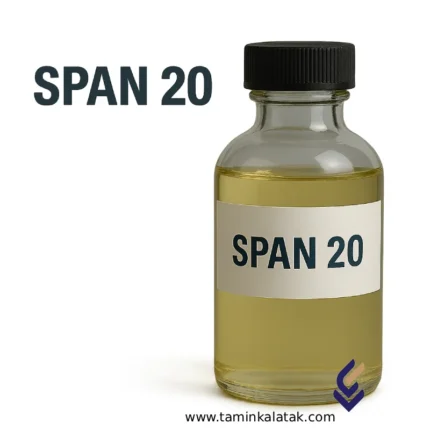
Span 20
Span 20 (INCI Name: Sorbitan Monolaurate) is a non-ionic surfactant and emulsifier derived from natural sorbitol and lauric acid.
It possesses a low Hydrophilic-Lipophilic Balance (HLB ≈ 8.6), making it particularly effective for stabilizing water-in-oil (W/O) emulsions.
Due to its mildness, stability, and compatibility with a wide range of cosmetic and food ingredients, Span 20 is widely used in pharmaceutical, cosmetic, food, and industrial formulations.
Chemical Structure and Composition
-
Chemical Formula: C₂₄H₄₆O₆
-
Molecular Weight: 430.6 g/mol
-
Chemical Family: Sorbitan esters
-
Structure: Ester of sorbitol and lauric acid, containing a hydrophilic polyhydric alcohol backbone and a lipophilic fatty acid chain.
-
CAS Number: 1338-39-2
-
E Number (Food Grade): E493
This amphiphilic molecular structure enables Span 20 to reduce interfacial tension and form stable emulsions between polar and non-polar phases.
Physical and Chemical Properties
| Property | Typical Value |
|---|---|
| Appearance | Yellow to amber viscous liquid or semi-solid |
| Odor | Mild, fatty odor |
| HLB Value | ~8.6 |
| Density (25 °C) | ≈ 1.03 g/cm³ |
| Melting Point | ~25 °C |
| Solubility | Insoluble in water, soluble in oils and many organic solvents |
| Viscosity (25 °C) | Moderate |
| pH Stability Range | 4 – 9 |
| Ionic Nature | Non-ionic |
Key Advantages
-
Naturally derived, biodegradable, and environmentally friendly
-
Excellent emulsifying performance in W/O systems
-
Enhances texture and smoothness of emulsions
-
Compatible with a broad range of non-ionic and ionic surfactants
-
Stable under various processing conditions (temperature, pH, electrolytes)
-
FDA and EFSA approved for use in food and cosmetic applications
Limitations
-
Limited efficiency in O/W (oil-in-water) emulsions due to low HLB value
-
Requires combination with high-HLB emulsifiers (e.g., Tween series) for balanced systems
-
May cause mild irritation in individuals with extremely sensitive skin
Applications
1. Food Industry
-
Emulsifier and stabilizer in sauces, dairy products, chocolates, and confectionery
-
Improves product texture, mouthfeel, and shelf-life
-
Prevents fat and water separation in emulsified systems
2. Cosmetics and Personal Care
-
Used in creams, lotions, balms, and sunscreens
-
Functions as an emollient, dispersant, and co-emulsifier
-
Provides smooth, non-greasy sensory feel
3. Pharmaceutical Applications
-
Enhances dispersion of lipophilic active ingredients in liquid or semi-solid dosage forms
-
Stabilizes topical and oral emulsions
-
Suitable for controlled-release formulations
4. Industrial Uses
-
Homogenizing agent in lubricants, coatings, and paints
-
Dispersant and wetting aid in agrochemicals
-
Improves compatibility and flow in wax and resin systems
Handling and Safety Information
-
Classification: Non-hazardous under normal handling conditions
-
Personal Protection: Use gloves, goggles, and protective clothing during large-scale handling
-
First Aid:
-
Eye Contact: Rinse thoroughly with water for several minutes
-
Skin Contact: Wash with soap and water
-
-
Fire Behavior: Non-flammable; may produce CO/CO₂ upon decomposition
Storage and Shelf Life
-
Storage Conditions:
-
Keep in tightly closed containers
-
Store in a cool, dry, and well-ventilated area (15 – 25 °C)
-
Protect from direct sunlight and moisture
-
-
Shelf Life: Minimum 24 months under recommended storage conditions
-
Packaging: Available in 25 kg drums, 200 kg barrels, or IBC totes upon request
Summary
Span 20 (Sorbitan Monolaurate) is a versatile, natural-origin emulsifier ideal for water-in-oil formulations in food, cosmetic, pharmaceutical, and industrial applications.
Its excellent stability, mildness, and emulsifying efficiency make it a preferred choice for formulators seeking performance and safety in a sustainable product.
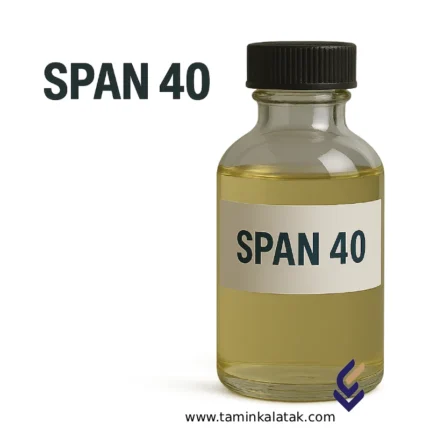
Span 40
Non-ionic Emulsifier with Low HLB Value
Span 40 (Sorbitan Monopalmitate) is a non-ionic emulsifier and stabilizer primarily used in water-in-oil (W/O) emulsions.
It is produced by the esterification of sorbitol with palmitic acid and is widely used across food, cosmetic, pharmaceutical, and chemical industries due to its excellent compatibility with oils and fats, thermal stability, and natural origin.
Chemical Composition and Structure
-
Chemical Name: Sorbitan Monopalmitate
-
Molecular Formula: C₂₂H₄₂O₆
-
Molecular Weight: 402.56 g/mol
-
CAS Number: 26266-57-9
-
Chemical Type: Non-ionic fatty acid ester
-
HLB Value: ~6.7 (ideal for W/O emulsions)
Molecular Structure:
Span 40 consists of a hydrophilic sorbitol backbone esterified with a lipophilic palmitic acid chain, providing balanced emulsifying and stabilizing properties.
Physical and Chemical Properties
| Property | Typical Value |
|---|---|
| Appearance | Yellowish to light brown wax or powder |
| Odor | Mild, nearly odorless |
| Density (20°C) | ≈ 1.03 g/cm³ |
| Melting Point | 42–47°C |
| Solubility | Soluble in oils and organic solvents; insoluble in water |
| HLB Value | ~6.7 |
| Thermal Stability | Stable under normal food and cosmetic processing conditions |
| Ionic Nature | Non-ionic |
Applications
1. Food Industry
-
Acts as an emulsifier and stabilizer in margarine, chocolate, confectionery creams, and dairy products
-
Prevents fat and sugar crystallization
-
Improves texture, consistency, and product stability
-
Approved for food use under FAO/WHO (E495) regulations
2. Cosmetics and Personal Care
-
Used in creams, lotions, balms, and skincare products as an emulsifier and stabilizer
-
Enhances oil phase dispersion and skin feel
-
Reduces stickiness and improves texture
3. Pharmaceutical Applications
-
Provides emulsion stability in semi-solid formulations such as creams and ointments
-
Enhances bioavailability of lipophilic active ingredients
-
Suitable for controlled-release drug delivery systems
4. Chemical and Industrial Uses
-
Emulsion stabilizer in lubricants, industrial oils, and protective coatings
-
Homogenizing agent for oil-based formulations
Advantages
-
Naturally derived and environmentally friendly
-
Excellent thermal and chemical stability
-
Non-toxic and safe within permitted usage levels
-
Highly compatible with vegetable and animal fats
-
Improves emulsion stability, shelf life, and product appearance
Limitations
-
Insoluble in water — often blended with high-HLB emulsifiers (e.g., Tween 40) for O/W systems
-
High concentrations may affect product texture
-
Must comply with FAO/WHO and FDA food-grade usage standards
Safety and Handling
-
Hazard Classification: Non-hazardous under normal conditions
-
Personal Protective Equipment (PPE): Wear protective gloves, dust mask, and safety goggles when handling solid or powdered form
-
Storage Conditions:
-
Keep in tightly sealed, moisture-resistant containers
-
Store at 15–30°C in a cool, dry, well-ventilated area
-
Protect from direct sunlight, heat sources, and oxidizing agents
-
-
Shelf Life: Minimum 24 months under recommended conditions
-
Typical Packaging: 25 kg bags or 200 kg drums
Summary
Span 40 (Sorbitan Monopalmitate) is a versatile, natural-origin, non-ionic emulsifier ideal for water-in-oil systems.
It offers excellent stability, compatibility with oils, and safe performance across a wide range of food, cosmetic, pharmaceutical, and industrial formulations. Its balance of hydrophilic and lipophilic properties makes it a reliable choice for stable, high-quality emulsions.

Span 60
Span 60, also known as Sorbitan Monostearate, is a non-ionic emulsifier obtained by the esterification of sorbitol with stearic acid.
It is widely used in the food, cosmetic, pharmaceutical, and chemical industries due to its excellent compatibility with oils, thermal stability, and emulsifying ability in water-in-oil (W/O) systems.
Span 60 appears as a yellowish to light brown waxy solid or powder, soluble in oils and organic solvents, but practically insoluble in water.
Chemical Composition and Structure
-
Chemical Name: Sorbitan Monostearate
-
Molecular Formula: C₂₄H₄₆O₆
-
Molecular Weight: ≈ 430.6 g/mol
-
CAS Number: 1338-41-6
-
Chemical Type: Non-ionic fatty acid ester
-
HLB Value: ~4.7 (ideal for W/O emulsions)
Structure Description:
Span 60 consists of a hydrophilic sorbitol moiety esterified with stearic acid, resulting in a molecule that effectively stabilizes oil-based systems while providing controlled emulsification.
Physical and Chemical Properties
| Property | Typical Value |
|---|---|
| Appearance | Yellowish to light brown waxy solid or powder |
| Odor | Mild, nearly odorless |
| Density (20°C) | ≈ 1.03 g/cm³ |
| Melting Point | 53–57°C |
| Solubility | Insoluble in water; soluble in oils and organic solvents |
| Thermal Stability | Stable under normal food and cosmetic processing conditions |
| Ionic Nature | Non-ionic |
Applications
1. Food Industry
-
Used as an emulsifier and stabilizer in margarine, non-dairy creamers, chocolates, and cakes
-
Improves texture, consistency, and product stability
-
Prevents fat crystallization
-
Complies with FAO/WHO and FDA food additive standards (E491)
2. Cosmetics and Personal Care
-
Emulsifier in creams, lotions, balms, and ointments
-
Enhances stability of oil-based phases and improves texture
-
Provides smooth skin feel and improved viscosity control
3. Pharmaceutical Industry
-
Used in controlled-release drug formulations
-
Enhances stability of creams, suspensions, and ointments
-
Improves bioavailability of lipophilic active ingredients
4. Chemical and Industrial Applications
-
Functions as a stabilizer and dispersant in lubricants, industrial oils, waxes, and coatings
-
Improves blend uniformity and product stability
Advantages
-
High compatibility with vegetable and mineral oils
-
Excellent thermal and chemical stability
-
Non-toxic and safe within permitted concentrations
-
Enhances shelf life and emulsion quality
-
Can be easily combined with other emulsifiers (e.g., Tweens) to adjust HLB values
Limitations
-
Insoluble in water, requiring combination with high-HLB emulsifiers for O/W systems
-
Excessive use may alter texture or consistency of end products
-
Must adhere to international regulatory standards for food and pharmaceutical applications
Safety and Handling
-
Safety: Safe at recommended concentrations; prolonged or direct contact with skin or eyes should be avoided
-
PPE (Personal Protective Equipment): Use gloves, mask, and safety goggles when handling the product
Storage Conditions:
-
Store in tightly sealed containers, protected from moisture and direct sunlight
-
Recommended storage temperature: 15–30°C
-
Keep away from strong oxidizing agents and heat sources
Shelf Life: Minimum 24 months under recommended conditions
Summary
Span 60 (Sorbitan Monostearate) is a versatile, non-ionic emulsifier derived from natural fatty acids.
Its excellent compatibility with oils, thermal stability, and low HLB value make it ideal for water-in-oil (W/O) emulsions in a wide range of food, cosmetic, pharmaceutical, and industrial formulations.
It provides reliable emulsion stability, improves product texture, and ensures consistent quality in end applications.
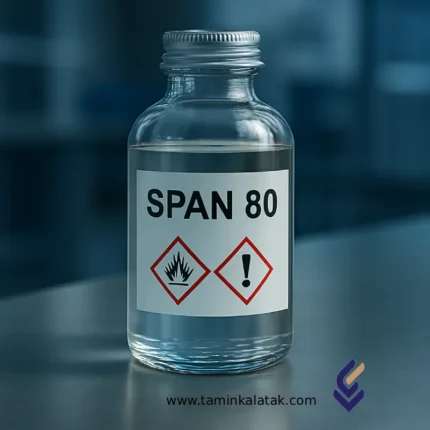
Span 80
Span 80, chemically known as Sorbitan Monooleate, is a widely used non-ionic emulsifier produced by the esterification of sorbitol with oleic acid.
Due to its low HLB value (approximately 4.3), it is primarily employed in water-in-oil (W/O) emulsions across the food, cosmetic, pharmaceutical, and chemical industries.
Chemical Structure
-
Chemical Name: Sorbitan Monooleate
-
Molecular Formula: C₂₄H₄₄O₆
-
Molecular Weight: ≈ 428.6 g/mol
-
Chemical Type: Non-ionic fatty acid ester
-
Molecular Structure: Composed of a sorbitan (dehydrated sorbitol) core linked to an oleic acid chain
-
HLB Value: ~4.3 (ideal for W/O emulsions)
Physical and Chemical Properties
| Property | Typical Value |
|---|---|
| Appearance | Yellowish-brown viscous liquid |
| Odor | Mild, fatty |
| Solubility in Water | Practically insoluble (dispersible with co-emulsifiers) |
| Density (20°C) | ≈ 0.986 g/cm³ |
| Freezing Point | ≈ 5°C |
| pH Stability | Stable in neutral pH; sensitive to strong acidic or alkaline conditions |
| Ionic Nature | Non-ionic |
Applications
1. Food Industry
-
Used to stabilize water-in-oil emulsions in margarine, sauces, and dairy-based products
-
Improves texture, consistency, and emulsion stability
2. Cosmetics and Personal Care
-
Emulsifier in creams, lotions, and oil-based formulations
-
Provides smooth texture, enhances spreadability, and stabilizes fatty phases
3. Pharmaceutical Industry
-
Used in lipophilic drug delivery systems and topical formulations
-
Enhances dispersion and bioavailability of active ingredients
4. Paints and Coatings
-
Acts as a dispersing and stabilizing agent for pigments in non-polar media
5. Agricultural Chemicals
-
Serves as an emulsifying agent in oil-based pesticide formulations
Advantages
-
Excellent emulsifying ability for W/O systems
-
Non-toxic and approved for use in food and cosmetic applications (within regulated limits)
-
High compatibility with various oils and fats
-
Contributes to increased viscosity and enhanced emulsion stability
Limitations
-
Low water solubility, requiring combination with higher-HLB emulsifiers (e.g., Tweens) for O/W systems
-
Reduced stability in strongly acidic or alkaline environments
-
May cause mild skin irritation in sensitive individuals at high concentrations
Safety and Storage
-
Storage Conditions: Store in a cool, dry, and well-ventilated area, away from direct sunlight
-
Packaging: Typically supplied in sealed plastic or metal drums
-
Safety: Generally non-hazardous under normal use conditions
-
Avoid direct contact with eyes; rinse thoroughly with water if contact occurs
-
-
Shelf Life: Minimum 24 months under recommended conditions
Summary
Span 80 (Sorbitan Monooleate) is a non-ionic, oil-soluble emulsifier with a low HLB value, making it ideal for water-in-oil emulsions.
It is extensively used in food, cosmetic, pharmaceutical, and chemical formulations to enhance stability, texture, and viscosity.
With its natural fatty acid origin, biocompatibility, and broad industry acceptance, Span 80 remains one of the most versatile emulsifiers in modern formulation science.
Stabilizers
Stabilizers are substances that are added to various products such as food, medicine, paint and plastic to prevent unwanted changes in their physical and chemical properties. These substances increase the shelf life and improve the quality of products by inhibiting oxidation, decomposition and other chemical changes.
Applications of stabilizersStabilizers are used in various industries: Food industry: To increase the shelf life of oils, fats, and products containing vitamin C. Pharmaceutical industry: To increase the shelf life of drugs and maintain their therapeutic properties. Plastics industry: To increase the shelf life of plastic products and improve their resistance to environmental factors. Paint and coating industry: To increase the resistance of paints and coatings to light, heat and moisture. Stabilizer safety
Stearic acid
Lorem ipsum dolor sit amet, consectetur adipiscing elit. Vestibulum sagittis orci ac odio dictum tincidunt. Donec ut metus leo. Class aptent taciti sociosqu ad litora torquent per conubia nostra, per inceptos himenaeos. Sed luctus, dui eu sagittis sodales, nulla nibh sagittis augue, vel porttitor diam enim non metus. Vestibulum aliquam augue neque. Phasellus tincidunt odio eget ullamcorper efficitur. Cras placerat ut turpis pellentesque vulputate. Nam sed consequat tortor. Curabitur finibus sapien dolor. Ut eleifend tellus nec erat pulvinar dignissim. Nam non arcu purus. Vivamus et massa massa.
Stearic Acid Cosmetic Grade
Cosmetic Grade Stearic Acid is a long-chain saturated fatty acid widely used in the cosmetic industry. This natural substance is found in many animal and vegetable fats and plays an important role in the formulation of cosmetic products due to its unique properties.
Cosmetic grade stearic acid propertiesEmulsifier: Stearic acid acts as an emulsifier, allowing oily and aqueous substances to mix well. This property has made it one of the main components in the production of lotions, creams and emulsions. Thickener: Stearic acid gives consistency and thickness to cosmetic products and makes their texture creamy and soft. Emollient: This substance helps to soften and smooth the skin and hair and prevents them from drying out. Stabilizing agent: Stearic acid helps stabilize emulsions and prevents the separation of oil and water phases. Dispersing agent: Stearic acid helps evenly disperse pigments and other ingredients in cosmetic products.
Cosmetic Grade Stearic Acid ApplicationsLotion and Cream Production: Stearic acid is used as an emulsifier and thickener in the production of moisturizing lotions and creams. Soap Production: Stearic acid is a major component in the production of solid and liquid soaps. Shampoo and Conditioner Production: Stearic acid is used as an emollient and thickening agent in shampoos and conditioners. Color Cosmetic Production: Stearic acid is used as a dispersing and thickening agent in the production of lipsticks, blushes, eye shadows, and other color cosmetics. Skin Care Products: Stearic acid is used in the production of skin care products such as face masks and serums.
Benefits of Using Cosmetic Grade Stearic AcidSafety: Stearic acid is generally a safe and skin-friendly substance. Natural: Stearic acid is a natural substance obtained from plant and animal sources. Versatile: Stearic acid has numerous properties and is used in the formulation of a variety of cosmetic and health products. Affordable: Stearic acid is a relatively inexpensive substance.


