




Sodium Nitrite
Lorem ipsum dolor sit amet, consectetur adipiscing elit. Vestibulum sagittis orci ac odio dictum tincidunt. Donec ut metus leo. Class aptent taciti sociosqu ad litora torquent per conubia nostra, per inceptos himenaeos. Sed luctus, dui eu sagittis sodales, nulla nibh sagittis augue, vel porttitor diam enim non metus. Vestibulum aliquam augue neque. Phasellus tincidunt odio eget ullamcorper efficitur. Cras placerat ut turpis pellentesque vulputate. Nam sed consequat tortor. Curabitur finibus sapien dolor. Ut eleifend tellus nec erat pulvinar dignissim. Nam non arcu purus. Vivamus et massa massa.
Sodium stearyl sulfate
Lorem ipsum dolor sit amet, consectetur adipiscing elit. Vestibulum sagittis orci ac odio dictum tincidunt. Donec ut metus leo. Class aptent taciti sociosqu ad litora torquent per conubia nostra, per inceptos himenaeos. Sed luctus, dui eu sagittis sodales, nulla nibh sagittis augue, vel porttitor diam enim non metus. Vestibulum aliquam augue neque. Phasellus tincidunt odio eget ullamcorper efficitur. Cras placerat ut turpis pellentesque vulputate. Nam sed consequat tortor. Curabitur finibus sapien dolor. Ut eleifend tellus nec erat pulvinar dignissim. Nam non arcu purus. Vivamus et massa massa.
Sodium Sulphate
Lorem ipsum dolor sit amet, consectetur adipiscing elit. Vestibulum sagittis orci ac odio dictum tincidunt. Donec ut metus leo. Class aptent taciti sociosqu ad litora torquent per conubia nostra, per inceptos himenaeos. Sed luctus, dui eu sagittis sodales, nulla nibh sagittis augue, vel porttitor diam enim non metus. Vestibulum aliquam augue neque. Phasellus tincidunt odio eget ullamcorper efficitur. Cras placerat ut turpis pellentesque vulputate. Nam sed consequat tortor. Curabitur finibus sapien dolor. Ut eleifend tellus nec erat pulvinar dignissim. Nam non arcu purus. Vivamus et massa massa.
Sodium Sulphide
Lorem ipsum dolor sit amet, consectetur adipiscing elit. Vestibulum sagittis orci ac odio dictum tincidunt. Donec ut metus leo. Class aptent taciti sociosqu ad litora torquent per conubia nostra, per inceptos himenaeos. Sed luctus, dui eu sagittis sodales, nulla nibh sagittis augue, vel porttitor diam enim non metus. Vestibulum aliquam augue neque. Phasellus tincidunt odio eget ullamcorper efficitur. Cras placerat ut turpis pellentesque vulputate. Nam sed consequat tortor. Curabitur finibus sapien dolor. Ut eleifend tellus nec erat pulvinar dignissim. Nam non arcu purus. Vivamus et massa massa.
Sodium thiosulfate
Lorem ipsum dolor sit amet, consectetur adipiscing elit. Vestibulum sagittis orci ac odio dictum tincidunt. Donec ut metus leo. Class aptent taciti sociosqu ad litora torquent per conubia nostra, per inceptos himenaeos. Sed luctus, dui eu sagittis sodales, nulla nibh sagittis augue, vel porttitor diam enim non metus. Vestibulum aliquam augue neque. Phasellus tincidunt odio eget ullamcorper efficitur. Cras placerat ut turpis pellentesque vulputate. Nam sed consequat tortor. Curabitur finibus sapien dolor. Ut eleifend tellus nec erat pulvinar dignissim. Nam non arcu purus. Vivamus et massa massa.
Sodium Tripoly Phosphate (STTP) Powder- Granular
Lorem ipsum dolor sit amet, consectetur adipiscing elit. Vestibulum sagittis orci ac odio dictum tincidunt. Donec ut metus leo. Class aptent taciti sociosqu ad litora torquent per conubia nostra, per inceptos himenaeos. Sed luctus, dui eu sagittis sodales, nulla nibh sagittis augue, vel porttitor diam enim non metus. Vestibulum aliquam augue neque. Phasellus tincidunt odio eget ullamcorper efficitur. Cras placerat ut turpis pellentesque vulputate. Nam sed consequat tortor. Curabitur finibus sapien dolor. Ut eleifend tellus nec erat pulvinar dignissim. Nam non arcu purus. Vivamus et massa massa.
Sodium Tripolyphosphate
Sodium tripolyphosphate is a chemical compound with the formula Na₅P₃O₁₀ that is widely used in various industries. It is found in many everyday products due to its unique properties, including its ability to chelate metal ions and disperse particles.
Sodium tripolyphosphate PropertiesChelating: It acts as a strong chelating agent and forms complexes with metal ions such as calcium and magnesium. Dispersing: It can disperse solid particles in liquids and prevent the formation of sediment. Anti-scaling: It prevents the formation of sediment in aqueous systems by forming complexes with calcium and magnesium ions. Emulsifying: It can act as an emulsifier in emulsion systems and prevent the separation of different phases.
Sodium Tripolyphosphate ApplicationsDetergent Industry: Used as a water softener in detergents and helps improve the performance of detergents. Food Industry: Used in the food industry as an anti-caking agent, emulsifier and preservative. Paper Industry: Used in the paper industry as a paper quality improving agent. Leather Industry: Used in the leather industry as a tanning agent. Textile Industry: Used in the textile industry as a softener and stain remover.
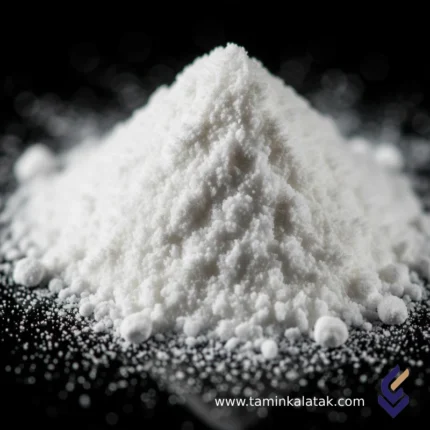
Sorbic acid
Sorbic acid is an unsaturated fatty acid with natural antimicrobial properties, widely used as a food preservative.
It occurs naturally in certain plants, such as rowan berries, but is now mainly produced synthetically on an industrial scale.
Sorbic acid is one of the most commonly used food-grade preservatives, and it is officially designated as E200 in the food additive system.
Chemical Structure
-
Molecular Formula: C₆H₈O₂
-
IUPAC Name: (2E,4E)-hexa-2,4-dienoic acid
-
Structure Description: A six-carbon chain containing two conjugated double bonds and a carboxylic acid group (–COOH)
The presence of conjugated double bonds in its structure makes sorbic acid chemically reactive and responsible for its antifungal and antibacterial activity.
Physical and Chemical Properties
| Property | Value / Description |
|---|---|
| Physical State | White or slightly yellowish crystalline powder |
| Taste and Odor | Tasteless or slightly acidic, odorless or faint odor |
| Melting Point | 132–135 °C |
| Solubility in Water (25 °C) | 0.16 g per 100 mL (sparingly soluble) |
| Solubility in Alcohol | High |
| pH (1% Aqueous Solution) | 2.5–3.5 |
| Food Additive Code | E200 |
| Thermal Stability | Relatively stable up to 150 °C |
Applications of Sorbic Acid
Food Industry
-
Preservative in juices, dairy products, cheese, sauces, jams, beverages, cakes, and biscuits
-
Prevents the growth of molds, yeasts, and certain bacteria
Pharmaceutical Industry
-
Added to syrups, tablets, and ointments to increase shelf life
Cosmetic and Personal Care Industry
-
Used in creams, lotions, shampoos, and facial masks as a stabilizer and preservative
Animal Feed Industry
-
Serves as a preservative in compound feed and nutritional supplements
Advantages of Sorbic Acid
-
Natural and non-toxic: Safe for human consumption (approved by FDA and EFSA)
-
Effective antimicrobial activity at low concentrations
-
Compatible with a wide pH range, especially below 6.5
-
Does not affect the taste or odor of final products
-
Can be combined with other preservatives such as potassium sorbate
-
Suitable for organic and natural product formulations
Disadvantages of Sorbic Acid
-
Low solubility in cold water (requires soluble derivatives such as potassium sorbate for some formulations)
-
Limited effectiveness at high pH (> 6.5)
-
May oxidize under improper storage conditions
-
Decomposes at elevated temperatures
-
In rare cases, skin irritation or allergic reactions may occur at high concentrations
Sorbinan Tristearate
Sorbitan tristearate is an ester of sorbitan and stearic acid that is used as an emulsifier in various industries, especially in the production of food, cosmetics, and pharmaceuticals. Due to its unique properties, this substance is also used as a stabilizer, thickener, and antifoaming agent.
Structure and PropertiesStructure: Sorbitan tristearate has a complex molecular structure that contains a sorbitan nucleus and three stearic acid chains. This structure gives it hydrophobic (lipophilic) properties. Properties: Emulsifier: It has the ability to combine oily and aqueous substances and is very effective in creating stable emulsions. Thickener: Increases the viscosity of products and gives them the desired consistency. Antifoaming agent: Helps improve the appearance and texture of liquid products by reducing foam formation. Stabilizer: Helps stabilize emulsions and suspensions and prevents phase separation. Good compatibility: Compatible with many other materials.
Sorbitan tristearate applicationsFood industry: Emulsifier: In the production of dairy products, sauces, chocolate and baked goods Thickener: In the production of products such as peanut butter and margarine Antifoaming agent: In the production of fermented products Cosmetic industry: Lotions and creams: As an emulsifier and thickener Soaps: As a hardening agent Cosmetic products: As a color and texture stabilizer Pharmaceutical industry: Drug formulation: As an emulsifier and anti-caking agent in the production of tablets and capsules
Benefits of using sorbitan tristearateSafety: Generally recognized as safe for use in food, cosmetic and health products. Thermal stability: It is stable to heat and can be used in high temperature production processes. Good compatibility: It is compatible with many other materials and can be used in complex formulations. Versatile: It has a variety of applications and is used in various industries.
Sorbitan Mono Oleate Span 80
Sorbitan monooleate, commonly known as Aspen 80, is a nonionic surfactant that is widely used in various industries, especially in the production of food, cosmetics, and pharmaceuticals. Due to its unique properties, it is also known as a stabilizer, emulsifier, and foaming agent.
Sorbitan Monooleate PropertiesEmulsifier: Has the ability to create stable emulsions between oil and water. Stabilizer: Helps stabilize emulsions and suspensions. Reducing surface tension: Reduces surface tension, which helps improve the spreading of materials. Compatibility with other materials: Compatible with many other materials.
Applications of Sorbitan Monooleate (Span 80)Food industries: As an emulsifier in the production of dairy products, sauces, chocolate and baked goods As a stabilizer in products such as peanut butter and margarine As an antifoaming agent in the production of fermented products Cosmetic industries: Used in lotions, creams, shampoos and cosmetic products as an emulsifier and emollient. Used in the production of skin care products as an emulsifier and moisturizer. Pharmaceutical industries: Used as an emulsifier in the production of tablets, capsules and other pharmaceutical products. Used as a solvent in the production of some drugs.
Sorbitan monolaurate
Sorbitan esters, often referred to as Spans, are derived from the esterification of sorbitol with fatty acids. This process results in a range of molecules with varying degrees of esterification and HLB (Hydrophilic-Lipophilic Balance) values.
-
Low HLB Sorbitan Esters:
- Sorbitan monostearate (HLB 4.7): Ideal for stabilizing water-in-oil (W/O) emulsions due to its lipophilic nature.
-
High HLB Sorbitan Esters:
- Sorbitan monolaurate (HLB 8.6): Suitable for oil-in-water (O/W) emulsions.
Polysorbates (Tweens)
Polysorbates, or Tweens, are non-ionic surfactants derived from sorbitan esters through ethoxylation. This process increases their hydrophilicity, making them suitable for various applications.
- Polysorbate 20: With an HLB of 16.7, it is highly hydrophilic and effective in stabilizing oil-in-water emulsions.
- Polysorbate 60: An intermediate HLB of 14.9 makes it versatile for both O/W and W/O emulsions.
- Polysorbate 65: With an HLB of 10.5, it is more lipophilic and suitable for W/O emulsions.
- Polysorbate 80: With an HLB of 15, it is widely used as an emulsifier, solubilizer, and stabilizer in various industries.
Key Properties and Applications:
- Emulsification: Both sorbitan esters and polysorbates are excellent emulsifiers, enabling the formation of stable dispersions of oil and water.
- Solubilization: They can solubilize hydrophobic substances in aqueous solutions.
- Surface Activity: They reduce surface tension, improving wetting and spreading properties.
- Stabilization: They stabilize emulsions and suspensions, preventing phase separation.
- Food Industry: Emulsifiers, stabilizers, and wetting agents.
- Cosmetic Industry: Emulsifiers, solubilizers, and surfactants.
- Pharmaceutical Industry: Excipients, solubilizers, and emulsifiers.
- Industrial Applications: Detergents, cleaners, and textile processing.
Sorbitan monooleate
Sorbitan monooleate is a non-ionic surfactant derived from sorbitol and oleic acid. It's widely used in various industries, including food, cosmetics, and pharmaceuticals, due to its excellent emulsification and stabilizing properties.
Key Properties and ApplicationsEmulsification: Sorbitan monooleate is a powerful emulsifier, enabling the mixing of oil and water-based substances. Solubilization: It helps in solubilizing hydrophobic substances in aqueous solutions. Stabilization: It stabilizes emulsions and suspensions, preventing phase separation. Food Industry: Emulsifier in various food products like margarine, ice cream, and bakery goods. Stabilizer for emulsions and suspensions. Cosmetic Industry: Emulsifier in creams, lotions, and makeup. Surfactant in cleansing products. Pharmaceutical Industry: Excipient in drug formulations. Emulsifier in topical and oral medications.


