




Rubber Preformer / Preform Machine
Lorem ipsum dolor sit amet, consectetur adipiscing elit. Vestibulum sagittis orci ac odio dictum tincidunt. Donec ut metus leo. Class aptent taciti sociosqu ad litora torquent per conubia nostra, per inceptos himenaeos. Sed luctus, dui eu sagittis sodales, nulla nibh sagittis augue, vel porttitor diam enim non metus. Vestibulum aliquam augue neque. Phasellus tincidunt odio eget ullamcorper efficitur. Cras placerat ut turpis pellentesque vulputate. Nam sed consequat tortor. Curabitur finibus sapien dolor. Ut eleifend tellus nec erat pulvinar dignissim. Nam non arcu purus. Vivamus et massa massa.
Rubber Reclaiming Activators
Rubber recycling activators are substances that speed up the recycling process of worn tires and improve the quality of the recycled product. These substances change the chemical structure of old tires, allowing them to be combined with newer raw materials to produce products with desirable properties.
Mechanism of actionChemical activators increase the reactivity level by changing the chemical structure of old rubber. These changes include breaking existing chemical bonds, creating new functional groups, and creating new cross-links. Physical activators soften and break down the structure of rubber by applying energy. This makes it easier for old rubber to be combined with new raw materials.
Applications of rubber recycling activatorsRubber industry: Production of new rubber products from recycled tires. Construction industry: Production of asphalt and rubber flooring. Automotive industry: Production of automotive parts such as gaskets, insulation, and wire covers.
Benefits of using rubber recycling activatorsReduction of production costs: By reducing the consumption of new raw materials and energy. Environmental protection: Reducing the volume of rubber waste and reducing the consumption of fossil fuels. Improving the properties of recycled products: Production of high-quality products with better performance.
Rubber Shoes Cold Glue Building Ma…
Lorem ipsum dolor sit amet, consectetur adipiscing elit. Vestibulum sagittis orci ac odio dictum tincidunt. Donec ut metus leo. Class aptent taciti sociosqu ad litora torquent per conubia nostra, per inceptos himenaeos. Sed luctus, dui eu sagittis sodales, nulla nibh sagittis augue, vel porttitor diam enim non metus. Vestibulum aliquam augue neque. Phasellus tincidunt odio eget ullamcorper efficitur. Cras placerat ut turpis pellentesque vulputate. Nam sed consequat tortor. Curabitur finibus sapien dolor. Ut eleifend tellus nec erat pulvinar dignissim. Nam non arcu purus. Vivamus et massa massa.
Rubber Shoes Gluing Heating Vulcan…
Lorem ipsum dolor sit amet, consectetur adipiscing elit. Vestibulum sagittis orci ac odio dictum tincidunt. Donec ut metus leo. Class aptent taciti sociosqu ad litora torquent per conubia nostra, per inceptos himenaeos. Sed luctus, dui eu sagittis sodales, nulla nibh sagittis augue, vel porttitor diam enim non metus. Vestibulum aliquam augue neque. Phasellus tincidunt odio eget ullamcorper efficitur. Cras placerat ut turpis pellentesque vulputate. Nam sed consequat tortor. Curabitur finibus sapien dolor. Ut eleifend tellus nec erat pulvinar dignissim. Nam non arcu purus. Vivamus et massa massa.
Rubber Shoes Injection Machine
Lorem ipsum dolor sit amet, consectetur adipiscing elit. Vestibulum sagittis orci ac odio dictum tincidunt. Donec ut metus leo. Class aptent taciti sociosqu ad litora torquent per conubia nostra, per inceptos himenaeos. Sed luctus, dui eu sagittis sodales, nulla nibh sagittis augue, vel porttitor diam enim non metus. Vestibulum aliquam augue neque. Phasellus tincidunt odio eget ullamcorper efficitur. Cras placerat ut turpis pellentesque vulputate. Nam sed consequat tortor. Curabitur finibus sapien dolor. Ut eleifend tellus nec erat pulvinar dignissim. Nam non arcu purus. Vivamus et massa massa.
Rubber Strainer
Lorem ipsum dolor sit amet, consectetur adipiscing elit. Vestibulum sagittis orci ac odio dictum tincidunt. Donec ut metus leo. Class aptent taciti sociosqu ad litora torquent per conubia nostra, per inceptos himenaeos. Sed luctus, dui eu sagittis sodales, nulla nibh sagittis augue, vel porttitor diam enim non metus. Vestibulum aliquam augue neque. Phasellus tincidunt odio eget ullamcorper efficitur. Cras placerat ut turpis pellentesque vulputate. Nam sed consequat tortor. Curabitur finibus sapien dolor. Ut eleifend tellus nec erat pulvinar dignissim. Nam non arcu purus. Vivamus et massa massa.
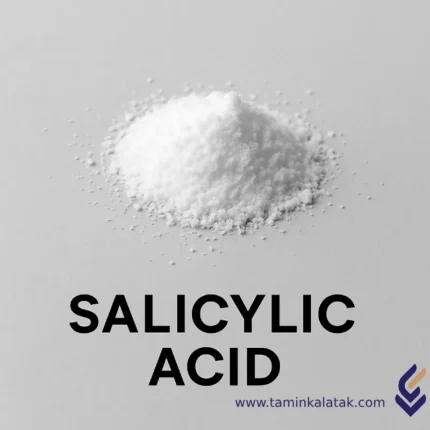
salicylic acid
Salicylic Acid (C₇H₆O₃) is a well-known organic compound characterized by its phenolic structure and anti-inflammatory as well as keratolytic (exfoliating) properties. It belongs to the beta hydroxy acid (BHA) family and occurs naturally in the bark of willow trees (Salix). Salicylic acid plays a crucial role in the treatment of numerous skin disorders and is one of the most effective ingredients used in anti-acne and exfoliating skincare products.
Chemical Structure
-
Molecular Formula: C₇H₆O₃
-
Chemical Name: 2-Hydroxybenzoic Acid
-
Structure: A benzene ring with two functional groups — a hydroxyl group (OH) at position 2 and a carboxylic acid group (COOH) at position 1.
This dual functionality gives salicylic acid both phenolic and carboxylic acid characteristics, contributing to its antibacterial activity and ability to penetrate skin pores effectively.
Physical and Chemical Properties
| Property | Value / Description |
|---|---|
| Physical State | White crystalline powder |
| Melting Point | Approximately 158–161 °C |
| Solubility | Soluble in alcohol and ether; slightly soluble in water |
| pH (1% aqueous solution) | Acidic — around 2.4 |
| Odor | Mild, phenolic |
| Stability | Relatively stable in acidic media; unstable in alkaline conditions |
Applications of Salicylic Acid
In Skincare Products
-
Anti-acne treatment
-
Chemical exfoliant
-
Cleansing and unclogging pores
-
Sebum (oil) regulation
In Scalp and Hair Treatments
-
Dandruff control
-
Treatment of psoriasis and seborrheic dermatitis
In Pharmaceuticals
-
Mild anti-inflammatory agent
-
Active ingredient in topical ointments and creams
In Cosmetic Formulations
-
Used in toners, serums, masks, cleansers, and day/night creams
-
Often combined with niacinamide or retinol for enhanced results
Advantages of Salicylic Acid
-
Deep pore penetration: Unlike AHAs, BHAs are oil-soluble, allowing deeper absorption into the skin.
-
Exfoliating and anti-inflammatory properties: Effective against acne, blackheads, and whiteheads.
-
Sebum control: Helps regulate skin oil production.
-
Mild antibacterial and antifungal effects.
-
Enhances absorption of other active ingredients in formulations.
Disadvantages and Limitations
-
Possible irritation for sensitive skin: may cause redness, dryness, or flaking.
-
Use with caution during pregnancy and breastfeeding.
-
High concentrations may lead to burning or inflammation.
-
Incompatible with certain ingredients such as strong acids, pure Vitamin C, or retinol (when used simultaneously).
SBC (SBS, SEBS, SIS, SEPS)
Styrene block copolymers (SBC) are a group of engineering polymers composed of repeating monomer units of styrene and DNA (DNAs include butadiene, isoprene, ethylene, and propylene). These polymers are widely used in various industries due to their unique properties, including a combination of rubber and plastic properties.
Types of Styrene Block CopolymersSBS (Styrene-Butadiene-Styrene): The most common type of SBC and is composed of hard styrene blocks and soft butadiene blocks. SBS has good mechanical properties, high elasticity, and wear resistance. SIS (Styrene-Isoprene-Styrene): Similar to SBS, but isoprene is used instead of butadiene. SIS is softer and more flexible than SBS. SEBS (Styrene-Ethylene/Butylene-Styrene): The hydrogenated form of SBS. SEBS has better heat and chemical resistance than SBS and maintains its flexibility even at low temperatures. SEPS (Styrene-Ethylene/Propylene-Styrene): It is the hydrogenated form of SIS. SEPS has similar properties to SEBS, but is slightly harder and more resistant to oils.
General properties of SBCCombination of rubber and plastic properties: SBCs have both the elastic properties of rubber and the moldability of plastics. Abrasion and tear resistance: SBS and SEBS in particular have good resistance to abrasion and tear. High flexibility: SIS and SEBS in particular have high flexibility. Thermal resistance: SEBS and SEPS have higher heat resistance than SBS and SIS. Chemical resistance: SEBS and SEPS have better chemical resistance than SBS and SIS. Moldability: SBCs can be easily molded into various shapes.
SBC ApplicationsAutomotive industry: Production of automotive parts such as gaskets, seat covers, seals and sound insulation. Shoe industry: Production of shoe soles, shoe uppers and other parts. Construction industry: Production of thermal insulation, floor coverings and sealants. Packaging industry: Production of packaging films, adhesives and protective coatings. Sports industry: Production of balls, sports shoes and other sports equipment.
Silica and Silicate Compounds
Silica and Silicate Compounds are two groups of chemical compounds based on the element silicon and play a very important role in the structure of the Earth and many materials used by humans. Due to their abundance and unique properties, these two materials have provided wide applications in various industries.
Silica
Silica is known by the chemical formula SiO₂ and is the simplest compound of silicon and oxygen. This material is found in pure form or as a compound in silicate minerals in nature. Pure silica exists in crystalline form (such as quartz) or amorphous (such as silica gel).
Properties of Silica:
High hardness: Silica is one of the hardest natural materials.
Heat resistance: It has a very high melting point and is resistant to heat.
Electrical insulation: It is an excellent insulator for the flow of electricity.
Transparency: Some types of silica, such as quartz, are transparent.
Applications of SilicaGlass industry: It is the main constituent of glass. Ceramic industry: Used in the production of ceramics, porcelain and bricks. Foundry industry: Used as a mold in metal casting. Electronics industry: Used in the production of integrated circuits and transistors. Construction industry: Used as an additive in concrete and mortar. Silicates Silicates are compounds that are formed from a combination of silicon, oxygen and one or more metals. These compounds have a very complex and diverse structure.
Properties of silicatesStructural diversity: Silicates have very diverse structures that diversify their physical and chemical properties. Hardness and resistance: Some silicates are very hard and resistant. Thermal insulation: Many silicates are good thermal insulators.
Applications of silicatesConstruction industry: Used in the production of cement, concrete, bricks and ceramics. Ceramic and tile industry: Used in the production of tiles, ceramics and porcelain. Paper industry: Used as a filler in paper. Paint and coating industry: Used as a pigment and filler in paints and coatings.
Small Chemicals Weighing & Batchin…
Lorem ipsum dolor sit amet, consectetur adipiscing elit. Vestibulum sagittis orci ac odio dictum tincidunt. Donec ut metus leo. Class aptent taciti sociosqu ad litora torquent per conubia nostra, per inceptos himenaeos. Sed luctus, dui eu sagittis sodales, nulla nibh sagittis augue, vel porttitor diam enim non metus. Vestibulum aliquam augue neque. Phasellus tincidunt odio eget ullamcorper efficitur. Cras placerat ut turpis pellentesque vulputate. Nam sed consequat tortor. Curabitur finibus sapien dolor. Ut eleifend tellus nec erat pulvinar dignissim. Nam non arcu purus. Vivamus et massa massa.
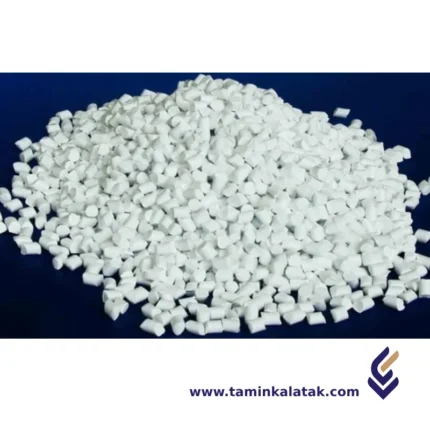
Smoothing Masterbatch
Smoothing masterbatch is an additive used in plastic manufacturing to enhance the surface quality of plastic products. It helps reduce roughness, improve gloss, and eliminate surface defects such as flow marks, weld lines, and die lines.
Structure
Smoothing masterbatch is typically composed of a carrier resin, functional additives, and processing aids. The carrier resin, often polyethylene (PE) or polypropylene (PP), ensures compatibility with the base polymer and facilitates uniform dispersion. Functional additives such as silicone-based compounds, waxes, or specialty lubricants are incorporated to reduce surface roughness and enhance flow properties. Processing aids help in minimizing defects like melt fracture, sharkskin, and flow marks by improving the polymer’s rheological behavior during extrusion or molding. The structure of the masterbatch is designed to be thermally stable and miscible with the target polymer, ensuring effective performance without negatively impacting mechanical properties. It is usually available in granular or pellet form, making it easy to handle and dose during manufacturing processes.
Properties
Smoothing masterbatch possesses several key properties that enhance the surface quality and processability of plastic products. It has excellent dispersion characteristics, allowing uniform distribution within the polymer matrix to ensure consistent performance. The masterbatch reduces surface roughness and enhances gloss by modifying the flow behavior of the molten polymer, preventing defects like melt fracture and flow marks. It also exhibits good thermal stability, maintaining its effectiveness even at high processing temperatures without degradation. Additionally, it improves lubricity, reducing friction between polymer chains and enhancing melt flow, which leads to better mold filling and extrusion performance. Smoothing masterbatch is compatible with a wide range of thermoplastics, including polyethylene, polypropylene, and polystyrene, and does not negatively impact the mechanical properties of the final product. Its ability to enhance surface aesthetics while maintaining structural integrity makes it a valuable additive in various plastic applications.
Applications:
- Blown Film & Cast Film: Enhances transparency, reduces surface roughness, and improves gloss.
- Injection Molding: Minimizes surface defects such as weld lines, flow marks, and melt fracture.
- Extrusion Coating & Lamination: Improves adhesion and surface finish for better product quality.
- Pipes & Profiles: Provides a smooth, uniform surface, reducing friction and wear.
- Automotive & Consumer Goods: Enhances the aesthetic appeal and tactile properties of plastic components.
- Improves surface smoothness and gloss for a high-quality finish.
- Reduces defects like sharkskin, melt fracture, and rough textures.
- Enhances flow properties, allowing better mold filling and extrusion.
- Compatible with various polymers without compromising mechanical properties.
- Improves processing efficiency by reducing friction and internal stress.
- Helps achieve better aesthetics in packaging, automotive, and household products.
- May increase production costs due to the additional material expense.
- Excessive use can affect the mechanical strength of the final product.
- Compatibility issues may arise with certain specialty polymers.
- Overuse might lead to adhesion problems in coating and printing applications.
- Requires precise dosing to achieve optimal performance without compromising quality.
Snow Chain
Lorem ipsum dolor sit amet, consectetur adipiscing elit. Vestibulum sagittis orci ac odio dictum tincidunt. Donec ut metus leo. Class aptent taciti sociosqu ad litora torquent per conubia nostra, per inceptos himenaeos. Sed luctus, dui eu sagittis sodales, nulla nibh sagittis augue, vel porttitor diam enim non metus. Vestibulum aliquam augue neque. Phasellus tincidunt odio eget ullamcorper efficitur. Cras placerat ut turpis pellentesque vulputate. Nam sed consequat tortor. Curabitur finibus sapien dolor. Ut eleifend tellus nec erat pulvinar dignissim. Nam non arcu purus. Vivamus et massa massa.


