




Aluminum Sulphate
Aluminum sulfate is a chemical agent most commonly used in water purification, for the pH regulation of garden soil and in waste water treatment. Medically, it is primarily used as a coagulating agent in minor cuts and abrasions as well as deodorant.
Aluminium sulfate is also known as Filter Alum or Dialuminum trisulfate. It appears as a white crystalline solid in waterless form and a colorless liquid in solution form. Both the forms are non-toxic and non-combustible.Application of aluminum sulfate
- Wastewater treatment
- Leather processing
- Metal finishing
- Pulp and paper
- Textile handling
- Solvents
- Paint and Coatings
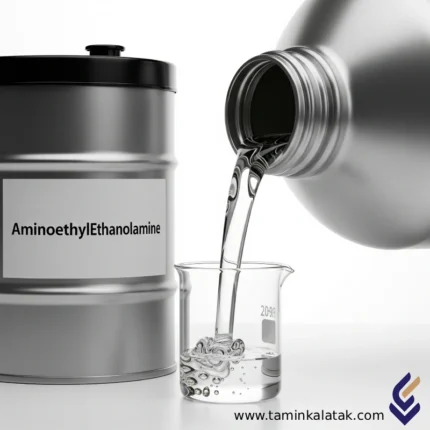
Amino Ethyl Ethanol Amin
Aminoethyl Ethanolamine (AEEA) is an organic aliphatic diamine with basic properties, containing two amine groups (one primary and one secondary) and one hydroxyl group.
It is a derivative of ethanolamines, and due to the presence of multiple functional groups, it is widely used as a humectant, ion-binding agent, chelating agent, and acid gas absorbent.
Chemical Information
-
Chemical Formula: C₄H₁₂N₂O
-
Molecular Structure: H₂N–CH₂–CH₂–NH–CH₂–CH₂–OH
-
Chemical Nature: Tri-functional compound containing two amines and one alcohol group
Physical and Chemical Properties
| Property | Typical Value / Range |
|---|---|
| Appearance | Clear, colorless to pale yellow liquid |
| Odor | Mild amine-like odor |
| Density (20°C) | 1.017 – 1.020 g/cm³ |
| Boiling Point | 243 – 244°C |
| Viscosity (25°C) | 120 – 180 cP |
| pH (10% aqueous solution) | 11.5 – 12.0 |
| Solubility | Completely miscible with water and soluble in alcohols |
| Aminolysis / Deamination | Possible under elevated temperature and specific pH conditions |
Applications of Aminoethyl Ethanolamine (AEEA)
Detergent and Personal Care Industries
-
Moisturizing and emulsifying agent
-
Intermediate in the synthesis of mild amine-based surfactants
-
Improves viscosity and skin compatibility
Paints, Inks, and Resin Industry
-
Crosslinking agent in epoxy resin systems
-
pH regulator and ionic binder in coatings
Oil, Gas, and Drilling
-
Absorbent for acidic gases such as CO₂ and H₂S (gas sweetening)
-
Corrosion inhibitor and descaling additive
Agriculture
-
Chelating agent in fertilizers and pesticides
-
Stabilizer in aqueous formulations
Polymer and Pharmaceutical Applications
-
Reactive intermediate for polyurethane and epoxy resin synthesis
-
Precursor for pharmaceutical intermediates and chemical additives
Advantages
-
High reactivity with epoxides and isocyanates
-
Strong basicity and excellent absorption capacity for acidic gases
-
Biodegradable with relatively low environmental toxicity
-
Suitable for skin-contact formulations in controlled concentrations
Limitations
-
Can irritate skin and eyes upon direct contact
-
Hygroscopic – readily absorbs moisture from air
-
Incompatible with strong oxidizing agents
-
May decompose at high temperatures, releasing nitrogen oxides
Safety and Handling Information
| Aspect | Guideline |
|---|---|
| Skin/Eye Contact | Irritating; use gloves, safety goggles, and protective clothing |
| Inhalation | High concentrations may irritate the respiratory system |
| Flash Point | 124 – 125°C |
| Storage Conditions | Store in tightly sealed, corrosion-resistant containers in a cool, dry place |
| Incompatible Materials | Strong oxidizers and strong mineral acids |
| Environmental Stability | Stable under normal conditions; biodegradable with proper disposal |
Summary
Aminoethyl Ethanolamine (AEEA) is a multi-functional aliphatic amine widely used across detergent, polymer, coatings, agricultural, and gas treatment industries.
Its reactivity, strong alkalinity, and multifunctional chemical structure make it a valuable intermediate for producing surfactants, resins, corrosion inhibitors, and gas-absorbing agents.
Aminotris (ATMP)
Tris buffer or tris(hydroxymethyl)aminomethane is a widely used chemical compound in biochemistry and molecular biology. It is used as a buffer for nucleic acid solutions and plays a vital role in laboratory research. Tris is also used in medicine as a drug to treat severe metabolic acidosis.
Tris (C4H11NO3) is a solid, colorless, odorless organic compound with a molarity of 121.14 g/mol and CAS number 77-86-1. As a primary amine, Tris participates in certain chemical reactions. It is widely used as a buffer in aqueous solutions and is an essential tool in biological research.
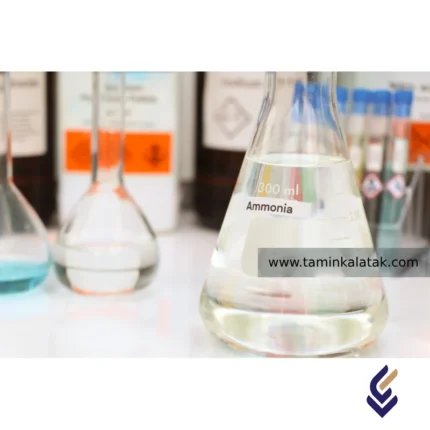
Ammonia
Ammonia (NH₃) is a colorless, pungent, toxic gas that is highly soluble in water. It plays a crucial role in the chemical, agricultural, water treatment, and fertilizer industries. Ammonia is one of the most important base chemicals in the production chain of nitrogen-containing compounds and is available commercially in two primary forms: anhydrous ammonia (compressed gas) and aqueous ammonia (ammonium hydroxide solution).
Chemical Structure of Ammonia
-
Molecular Formula: NH₃
-
Molecular Geometry: Trigonal pyramidal
-
Bond Angle: Approximately 107.8°
-
Bonding Characteristics: One nitrogen atom bonded to three hydrogen atoms, with one lone pair of electrons on the nitrogen atom
Physical and Chemical Properties
| Property | Description |
|---|---|
| State at Ambient Conditions | Gas (or liquefied under pressure) |
| Odor | Strong, sharp, irritating odor |
| Boiling Point | –33.34 °C |
| pH (1M aqueous solution) | Approximately 11.6 |
| Water Solubility | Very high — 1 volume of water dissolves about 700 volumes of NH₃ gas |
| Solubility in Ethanol | Low |
Applications of Ammonia
Agriculture
-
Production of nitrogen fertilizers such as urea, ammonium nitrate, and ammonium phosphate
-
Used for soil pH adjustment in acidic soils
Chemical Industry
-
Feedstock for the production of nitric acid, amines, nitrates, sodium amide, and other nitrogen-based compounds
-
Used in the synthesis of resins and various organic nitrogen compounds
Refining and Petrochemical Industries
-
Acts as a CO₂ absorbent in steam methane reforming (SMR) processes
-
Used in demulsification, gas scrubbing, and pollution control systems
Water and Wastewater Treatment
-
Removes heavy metal ions such as copper, nickel, and lead
-
Used for pH control and odor suppression of sulfur-containing compounds
Food and Pharmaceutical Industries
-
Limited use as a disinfectant and pH regulator
-
Intermediate for the production of ammonium bicarbonate (baking agent) and certain nitrogen-based pharmaceuticals
Refrigeration Industry
-
Used as a high-efficiency industrial refrigerant (R-717)
-
Offers excellent thermal performance in chillers and cold storage systems
Advantages of Ammonia
-
Cost-effective nitrogen source for fertilizer production
-
Highly efficient industrial refrigerant
-
Strong alkaline solution for water purification and heavy metal removal
-
Useful solvent and reactant in specialized chemical syntheses
-
Can be produced domestically via the Haber–Bosch process (from nitrogen and hydrogen gases)
Disadvantages of Ammonia
-
Highly toxic upon inhalation or skin contact
-
Flammable under certain conditions (at high concentrations in air)
-
Extremely pungent and irritating odor
-
Strongly corrosive in concentrated form
-
Requires specialized pressurized equipment for safe storage and handling
Safety and Handling of Ammonia
GHS Classification
-
H331: Toxic if inhaled
-
H314: Causes severe skin burns and eye damage
Personal Protective Equipment (PPE)
-
Respirator with ammonia-specific cartridge filter
-
Chemical-resistant gloves
-
Safety goggles and face shield
-
Proper ventilation is mandatory; use in enclosed spaces only with active exhaust systems
Fire and Explosion Hazards
-
Ammonia itself is not spontaneously flammable, but can form explosive mixtures with air at certain concentrations
Storage Conditions
-
Store in corrosion-resistant steel tanks
-
Keep away from moisture and under controlled temperature
-
Facilities must include leak detection and emergency safety systems
Industrial Transportation
-
Transported in pressurized tankers or cylinders
-
Classified as hazardous material – UN 1005
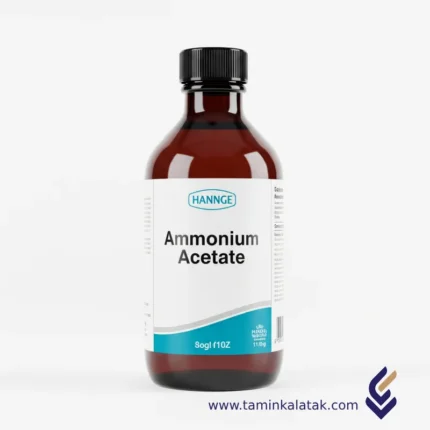
Ammonium acetate
Ammonium Acetate, with the chemical formula CH₃COONH₄, is the salt resulting from the reaction between acetic acid and ammonia. It appears as a white crystalline solid, is hygroscopic (moisture-absorbing), and has a faint ammonia odor due to partial decomposition. This compound is derived from a weak acid (acetic acid) and a weak base (ammonia), which gives it buffering properties in aqueous solution.
Structure of Ammonium Acetate
Ammonium acetate is an ionic compound composed of the ammonium cation (NH₄⁺) and the acetate anion (CH₃COO⁻). The acetate ion exhibits resonance between its two oxygen atoms, which contributes to its relative stability.
Chemical formula: CH₃COONH₄
Properties of Ammonium Acetate
-
Appearance: White crystalline powder, transparent or granulated
-
Solubility: Highly soluble in water and ethanol; slightly soluble in acetone
-
Hygroscopic: Easily absorbs moisture from the air
-
Melting Point: ~114 °C; decomposes upon heating into acetic acid and ammonia
-
Density: ~1.07 g/cm³ at 25 °C (equivalent to 1070 kg/m³ in SI units)
-
pH (aqueous solution): Nearly neutral, typically between 6.5 and 7.5 depending on concentration
-
Compressibility: Compressible
-
Colorless: Its solutions are usually clear and colorless
Applications of Ammonium Acetate
Food Industry:
-
Used as a food additive (E264)
-
Functions as a buffer and preservative in certain food products
Laboratory and Research:
-
pH buffer: Used in biochemistry, analytical chemistry, and molecular biology to maintain stable pH in reactions and enzyme processes (e.g., DNA extraction and protein purification)
-
Chromatography: Serves as a buffer or mobile phase in HPLC and mass spectrometry due to its volatility
-
Microbial detection
-
Biological media: Occasionally used in specialized bacterial growth environments
Pharmaceutical Industry:
-
Used in the manufacture of certain drugs and injectable solutions
-
Applied in organic synthesis of pharmaceutical compounds
Textile Industry:
-
Functions as an auxiliary agent in textile printing and dyeing processes
Chemical Industry:
-
Serves as a source of acetate or ammonia ions in organic synthesis
-
Used in the production of certain plastics and resins
-
Acts as a corrosion inhibitor in specific processes
Wastewater Treatment:
-
Used in biological processes to supply carbon and nitrogen for bacteria
Environmental Applications:
-
Used in some airport de-icing compounds as a chloride-free alternative
Advantages of Ammonium Acetate
-
Strong buffering capacity: Regulates and maintains pH near neutral
-
Volatile: Leaves no residue after evaporation, ideal for HPLC and mass spectrometry
-
Biodegradable: Breaks down naturally in the environment
-
High water solubility: Allows for preparation of high-concentration aqueous solutions
-
Relatively safe: Low toxicity in lab and industrial settings
-
Versatile use: Broadly applied across food, pharmaceutical, and chemical industries
Disadvantages of Ammonium Acetate
-
Ammonia odor: Releases a pungent, mild ammonia smell upon decomposition
-
Hygroscopicity: Absorbs moisture rapidly, requiring moisture-resistant packaging
-
Thermal decomposition: Breaks down into ammonia and acetic acid at high temperatures
-
Eye contact: May cause irritation, redness, or burning
-
Skin contact: May cause mild irritation
-
Inhalation of dust: May cause coughing or shortness of breath
-
Ingestion: In large amounts, may lead to gastrointestinal discomfort
-
-
Ventilation required: Especially in enclosed areas, due to irritating vapors
Ammonium Bicarbonate
Ammonium bicarbonate is an inorganic compound with the chemical formula NH₄HCO₃. This substance is in the form of a white, crystalline powder and is soluble in water. Ammonium bicarbonate has wide applications in various industries due to its special chemical properties.
Properties of Ammonium BicarbonateLow thermal stability: One of the most important properties of ammonium bicarbonate is its low thermal stability. With increasing temperature, this substance decomposes into ammonia, water, and carbon dioxide. This property has led to its use as a leavening agent in the food industry. Alkalinity: An aqueous solution of ammonium bicarbonate has alkaline properties. Ammonia odor: This substance has a mild ammonia odor. Solubility: It dissolves in water but is insoluble in alcohols and acetone.
Ammonium Bicarbonate ApplicationsFood Industry: Leaving Agent: The most important use of ammonium bicarbonate in the food industry is as a leavening agent in baked goods such as biscuits, crackers, and some breads. When heated, it decomposes and releases carbon dioxide gas, which causes dough to rise. pH Adjustment: It is used in some food products to adjust pH. Pharmaceutical Industry: Pharmaceutical Preparation: It is used as a raw material in the production of some drugs. Textile Industry: Dye Fixation: It is used in the textile industry to fix dyes on fibers. Rubber Industry: Sponge Rubber Production: It is used as a void-forming agent in the production of sponge rubber. Agricultural Industry: Fertilizer: It is used as a source of nitrogen in some chemical fertilizers.
Ammonium Chloride
Ammonium chloride is a chemical compound with the chemical formula NH₄Cl. It is a white crystalline solid and highly soluble in water. Ammonium chloride, or ammonium chloride, is found in nature as a mineral called ammonium salt and has wide applications in various industries due to its special chemical properties.
Properties of Ammonium ChlorideAcidic aqueous solution: An aqueous solution of ammonium chloride has weak acidic properties. High solubility in water: This substance dissolves easily in water. Thermal stability: It decomposes at high temperatures and produces ammonia and hydrogen chloride gases. Salty and cool taste: Its taste is salty and slightly cool.
Applications of Ammonium ChlorideFood industry: Food additive: It is used as a food additive with the number E510 and acts as a pH regulator and leavening agent in baked products such as bread and biscuits. Nutritional yeast: It is used as a nitrogen source for the growth of yeasts. Battery industry: Zinc-carbon battery: Used as an electrolyte in zinc-carbon batteries. Metalworking industry: Soldering flux: Used as a soldering flux to improve solder flow. Metal cleaning: Used to clean metal surfaces. Fertilizer industry: Nitrogen fertilizer: Used as a source of nitrogen in chemical fertilizers. Leather industry: Leather tanning: Used in the leather tanning process. Medical industry: Pharmaceutical: Used as a raw material in the production of some drugs.
Ammonium Lauryl Ether Sulfate
Ammonium Lauryl Ether Sulfate (ALES) is a surface-active substance or surfactant that is widely used in the production of detergent and hygiene products due to its high foaming and cleaning properties.
Application of Ammonium Lauryl Ether SulfateDue to its ability to create foam and cleanse, it is used in many everyday products, including shampoos, body washes, dishwashing liquid, shaving foam, and even some cosmetic products, such as:
- Shampoos
- Hand Washes
- Bath Soaps
- Body Washes
- Hair Color Products
Important points in using products containing ALESChoosing the right product: For sensitive skin, it is better to use products containing little or no ALES. Diluting the product: To reduce skin dryness, products containing ALES can be diluted with water. Using a conditioner: It is recommended to use a conditioner after using products containing ALES.
Ammonium lauryl sulfate
Pedapane AL-30 is a very effective detergent that removes dirt and grease from hair and skin.
This product is suitable for formulations with a pH between 5 and 7 and produces a very high, thick and stable foam and low color and impurities that leave the formulator with better control of the final product. This product, combined with Cocamidopropyl Betaine or Cocamido Diethanolamine, creates a very viscous product.
Features and Benefits
- Detergency
- Cleansing
- Good Penetration
- Emulsifier
- Foam Improver
Applications- Emulsion Polymerization - Shampoos - Soaps - Laundry - Facial Cleansers - Metalworking - Textile Industries - Oil & Gas Industries
Product SpecificationsAppearance Pale yellow or colorless liquid Molecular mass (g/mol) 297 Active substance 25±2 C12(wt%) 20-30 C14(wt%) 65-75 pH 7-May
Ammonium Sulfate
Ammonium sulfate is a mineral compound with the chemical formula (NH₄)₂SO₄ that is widely used as a chemical fertilizer in agriculture. It occurs as white or gray crystals and is easily soluble in water.
What is the use of ammonium sulfate?Agricultural fertilizer: The most important use of ammonium sulfate is as a fertilizer for alkaline soils. This fertilizer contains nitrogen (21%) and sulfur (24%), which are two essential elements for plant growth. Nitrogen helps in vegetative growth of plants, and sulfur plays a role in the production of proteins and enzymes. Adjusting soil pH: Ammonium sulfate has acidic properties and helps reduce the pH of alkaline soils. This allows the nutrients in the soil to be better absorbed by the plant. Improving soil quality: Ammonium sulfate helps improve soil structure and increase its permeability. Increasing crop yield: Using ammonium sulfate as a fertilizer leads to increased crop yield, improved crop quality, and increased plant resistance to diseases.
Uses of Ammonium SulfateAgricultural Fertilizer: The most important use of ammonium sulfate is as a fertilizer for alkaline soils. This fertilizer is used in the cultivation of various crops including cereals, cotton, sugar beets, and fruits. Soil pH adjustment: Ammonium sulfate is used to lower the pH of alkaline soils and improve plant growth conditions. Production of other chemicals: Ammonium sulfate is also used in the production of some chemicals such as ammonia and sulfuric acid.
Benefits of using ammonium sulfateRich source of nitrogen and sulfur: Ammonium sulfate is a rich and accessible source of nitrogen and sulfur for plants. Increased crop yield: Using ammonium sulfate as a fertilizer leads to a significant increase in the yield of agricultural products. Improved product quality: Agricultural products produced using ammonium sulfate are of higher quality. Affordable price: Ammonium sulfate is more affordable than other chemical fertilizers.
Amphoteric Surfactant
Amphoteric surfactant is a type of surface active agent that has both anionic and cationic functional groups in its structure. In simpler terms, these surfactants can acquire a positive or negative charge depending on environmental conditions (such as pH). This unique property makes amphoteric surfactants widely used in many products, especially personal care products.
Characteristics of amphoteric surfactantsCharge duality: The most important characteristic of these surfactants is their ability to change their electrical charge based on the pH of the environment. In acidic environments, they acquire a positive charge and in alkaline environments, they acquire a negative charge. High compatibility: They are highly compatible with other types of surfactants (anionic, cationic and non-ionic). Mildness: They are usually milder than anionic and cationic surfactants and are less irritating to the skin and hair. Good foaming: Many amphoteric surfactants have good foaming properties. High viscosity: Gives products a thick and creamy texture.
Applications of amphoteric surfactantsPersonal care products Shampoos: Used as a foaming agent and hair conditioner. Hand wash: Used in the production of hand wash for sensitive skin due to their mildness. Lotions and creams: Used as an emulsifier and softener. Baby care products: Used in baby products due to their mildness. Textile industry: Used as a softener and antistatic agent in the textile industry. Food industry: Used as an emulsifier in some food products.
AMPS (2-Acrylamido-2-Methyl-1- Propane Sulfonic Acid)
Lorem ipsum dolor sit amet, consectetur adipiscing elit. Vestibulum sagittis orci ac odio dictum tincidunt. Donec ut metus leo. Class aptent taciti sociosqu ad litora torquent per conubia nostra, per inceptos himenaeos. Sed luctus, dui eu sagittis sodales, nulla nibh sagittis augue, vel porttitor diam enim non metus. Vestibulum aliquam augue neque. Phasellus tincidunt odio eget ullamcorper efficitur. Cras placerat ut turpis pellentesque vulputate. Nam sed consequat tortor. Curabitur finibus sapien dolor. Ut eleifend tellus nec erat pulvinar dignissim. Nam non arcu purus. Vivamus et massa massa.


