
Polyethylene Glycol 4000

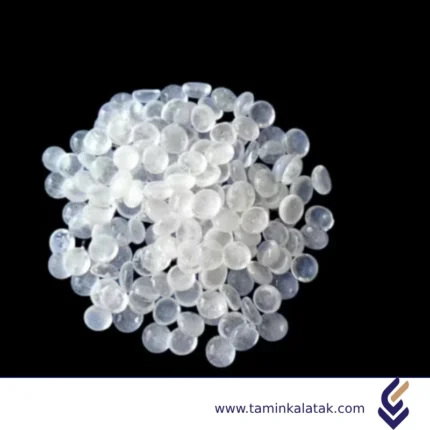
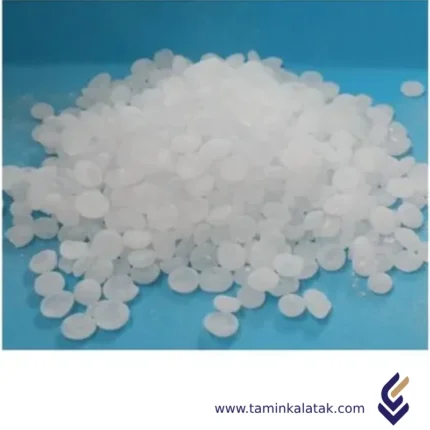
Polyethylene Glycol 4000 is a member of the polyethylene glycol family that is widely used in various industries due to its unique properties. This material is a waxy solid and dissolves easily in water. The number 4000 in its name refers to the average molecular weight of this compound.
Properties of polyethylene glycol 4000
High solubility: Soluble in water and many organic solvents. High viscosity: Due to its high molecular weight, it has a higher viscosity than PEGs with lower molecular weight. Non-toxic: It is not toxic to humans or the environment at low concentrations. Inertness: It is chemically neutral and is compatible with many materials. High melting point: It has a higher melting point than PEGs with lower molecular weight.
Applications of Polyethylene Glycol 4000
Pharmaceutical industry: As a drug carrier In the manufacture of creams, ointments and suppositories As a lubricant in tablets and capsules In the production of controlled drug release systems Cosmetics and hygiene industry: As an emulsifier and thickener In the production of creams, lotions and shampoos Food industry: As an anti-sticking agent In food protective coatings Textile industry: As a softener and anti-wrinkle agent Plastics industry: As a softener and improver of plastic properties
Benefits of using Polyethylene Glycol 4000
High biocompatibility: Suitable for use in pharmaceutical and cosmetic products. Adjustable physical properties: Its properties can be adjusted by changing the molecular weight. Non-toxic: It is not toxic to humans and the environment at low concentrations. Wide application: It is used in various industries.

Polyethylene Glycol 600

Polyethylene Glycol 600 is a member of the polyethylene glycol family that is widely used in various industries due to its unique properties. It is a clear, colorless liquid that is easily soluble in water. The number 600 in its name refers to the average molecular weight of this compound.
Properties of polyethylene glycol 600
High solubility: Soluble in water and many organic solvents. Low viscosity: Low viscosity due to its low molecular weight. Non-toxic: Not toxic to humans or the environment at low concentrations. Inertness: Chemically neutral and compatible with many materials. Low freezing point: It has a low freezing point, making it suitable for use in antifreeze products.
Applications of Polyethylene Glycol 600
Pharmaceutical industry: As a solvent for various drugs In the manufacture of creams, lotions and ointments As a softening agent in tablets In the production of controlled drug release systems Cosmetics and hygiene industry: As a carrier for active ingredients In the production of creams, lotions and shampoos As a moisturizer Food industry: As a softener and solvent In the production of ice cream, powdered milk and other food products Textile industry: As a softener and anti-wrinkle agent Paint and resin industry: As a solvent and emulsifier Automotive industry: As an antifreeze and lubricant

Polyethylene Glycol 6000

Polyethylene Glycol 6000 is a member of the polyethylene glycol family that is widely used in various industries due to its unique properties. This material is a waxy solid and dissolves easily in water. The number 6000 in its name refers to the average molecular weight of this compound.
Properties of polyethylene glycol 6000
High solubility: Soluble in water and many organic solvents. High viscosity: Due to its high molecular weight, it has a higher viscosity than PEGs with lower molecular weight. Non-toxic: It is not toxic to humans or the environment at low concentrations. Inertness: It is chemically neutral and is compatible with many materials. High melting point: It has a higher melting point than PEGs with lower molecular weight.
Applications of Polyethylene Glycol 6000
Pharmaceutical industry: As a drug carrier In the manufacture of creams, ointments and suppositories As a lubricating agent in tablets and capsules In the production of controlled drug release systems Cosmetics and hygiene industry: As an emulsifier and thickener In the production of creams, lotions and shampoos Food industry: As an anti-sticking agent In food protective coatings Textile industry: As a softener and anti-wrinkle agent Plastics industry: As a softener and improver of plastic properties

Polyethylene glycol 7 glyceryl cocoate

Polyethylene glycol 7 (PEG-7), or glyceryl coconutate, is a synthetic polymer used as an emollient, surfactant, and foam booster in cosmetic and personal care products. It is an excellent emulsifier, soluble in water and alcohol, and insoluble in oil. PEG-7 is ideal for the production of products such as moisturizers, shampoos, and body lotions. This compound has excellent emulsifying, softening and viscosifying properties and is also suitable as a surfactant and foam booster and is very effective for smoothness and softness of the skin.
Features
Soluble in water High compatibility with various organic compounds Low toxicity Moisture absorbent Has a mild odor
Applications
Glyceryl cocoate is used in various industries, for example: In shampoos and personal care products as a conditioner As an emulsifier and solvent for essential oils As a superfatting agent in cosmetic products, without reducing foam In baby shampoo and skin softener In the leather, textile and food industries

Polyethylene Talc Compound

A Polyethylene Talc Compound is a polymer blend that consists of polyethylene (PE) as the base resin and talc as a filler or reinforcing agent. This type of compound is used to improve the mechanical, thermal, and processing properties of polyethylene-based materials.

Structure Polyethylene Talc Compound

The structure of a polyethylene talc compound consists of a polymer matrix made of polyethylene, which can be low-density polyethylene (LDPE), high-density polyethylene (HDPE), or linear low-density polyethylene (LLDPE), combined with talc as a filler or reinforcing agent. The talc particles are dispersed throughout the polyethylene matrix, creating a composite material with enhanced mechanical and thermal properties. Talc, a naturally occurring magnesium silicate mineral, has a plate-like structure that helps improve stiffness, dimensional stability, and heat resistance when integrated into the polyethylene. The dispersion of talc within the polyethylene affects the overall material performance, depending on factors such as particle size, distribution, and surface treatment. In some formulations, additional additives such as compatibilizers, processing aids, and stabilizers are included to optimize performance, improve processing characteristics, and ensure uniform dispersion of the talc within the polyethylene matrix. The resulting compound maintains the flexibility and lightweight nature of polyethylene while benefiting from the increased rigidity and thermal stability provided by the talc.

Properties Polyethylene Talc Compound

The properties of polyethylene talc compound are influenced by the combination of polyethylene as the base resin and talc as a reinforcing filler. This compound exhibits improved stiffness and rigidity compared to pure polyethylene due to the presence of talc, which enhances its structural integrity. It also has better heat resistance, as talc increases the heat deflection temperature, making the material more suitable for applications exposed to higher temperatures. The addition of talc improves dimensional stability by reducing shrinkage and warpage, which is especially beneficial in injection molding and thermoforming processes. Furthermore, the compound has enhanced barrier properties, offering better resistance to moisture and gas permeability. It also provides improved processability by reducing melt viscosity, aiding in better mold flow and reduced cycle times. Additionally, the talc content contributes to cost reduction by replacing part of the more expensive polyethylene resin while maintaining desirable mechanical properties. The surface characteristics of the compound can be modified depending on the talc concentration, leading to improved scratch and wear resistance. Overall, polyethylene talc compounds offer a balance of strength, thermal stability, and process efficiency, making them suitable for a wide range of industrial applications.

Applications Polyethylene Talc Compound

  • Automotive parts such as dashboards, door panels, and under-the-hood components
  • Packaging materials including rigid containers, films, and industrial packaging
  • Consumer goods such as household appliances, toys, and furniture components
  • Industrial applications like pipes, sheets, and construction materials
  • Electrical and electronic enclosures for improved insulation and durability
  • Medical and pharmaceutical containers due to enhanced barrier properties

Advantages Polyethylene Talc Compound

  • Increased stiffness and rigidity for improved structural performance
  • Enhanced heat resistance, making it suitable for high-temperature applications
  • Better dimensional stability, reducing shrinkage and warpage in molded parts
  • Cost-effective due to talc acting as a filler, reducing overall material costs
  • Improved processability with better mold flow and reduced cycle times
  • Enhanced surface properties such as scratch and wear resistance
  • Better barrier properties against moisture and gas permeability

Disadvantages Polyethylene Talc Compound

  • Reduced impact resistance compared to pure polyethylene, making it more brittle
  • Increased weight due to the addition of talc, which may not be ideal for lightweight applications
  • Possible reduction in transparency, limiting its use in clear or translucent products
  • Potential difficulties in recycling due to the composite nature of the material
  • May require additional processing adjustments to ensure uniform dispersion of talc in the polymer matrix

PolyHydroxyAlkanoate (PHA)

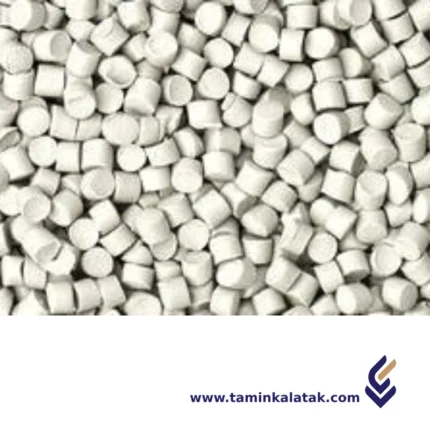
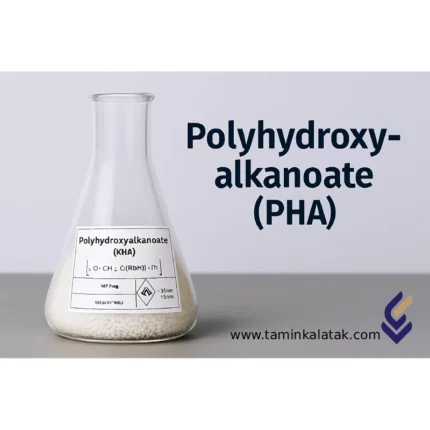
Polyhydroxyalkanoate (PHA) is one of the most innovative biodegradable polymers, attracting significant attention from various industries due to its environmental compatibility and wide range of applications. As a sustainable alternative to conventional plastics, this biopolymer offers an eco-friendly solution to reduce environmental pollution.

Structure of Polyhydroxyalkanoate (PHA)

Polyhydroxyalkanoates are a family of biodegradable polyesters produced by microorganisms (such as bacteria) under specific growth conditions. These polymers consist of hydroxyalkanoate monomer units linked together by ester bonds. The chemical structure of PHA depends on the type of monomers and production process and can include short-chain-length (SCL) or medium-chain-length (MCL) structures. This structural flexibility allows the production of PHAs with a wide variety of mechanical and physical properties.

Properties of Polyhydroxyalkanoate (PHA)

  • Biodegradability: Completely degraded by microorganisms in various environments (soil, seawater, compost).

  • Biocompatibility: Non-toxic and suitable for medical and pharmaceutical applications.

  • Mechanical versatility: Ranges from flexible to rigid, depending on monomer composition.

  • Thermal resistance: Certain PHA grades remain stable up to around 160°C.

  • Renewable origin: Produced from biological feedstocks such as sugars, vegetable oils, or agricultural waste.

Applications of Polyhydroxyalkanoate (PHA)

  • Packaging: Used to produce biodegradable bags, films, and containers.

  • Medical field: Applied in absorbable sutures, implants, and drug delivery systems.

  • Agriculture: Used in biodegradable mulching films and plant pots.

  • Textile industry: Production of bio-based fibers for clothing.

  • Single-use products: Manufacturing of eco-friendly straws, spoons, and forks.

Disadvantages of Polyhydroxyalkanoate (PHA)

  • High production cost: Microbial fermentation and PHA extraction processes are expensive.

  • Variable mechanical properties: Some grades may be brittle or have lower strength.

  • Degradation rate: Decomposition speed may be slower than expected in some environments.

  • Infrastructure requirements: Industrial recycling or composting facilities are needed for optimal biodegradation.

Advantages of Polyhydroxyalkanoate (PHA)

  • Environmental friendliness: Reduces dependence on petroleum-based plastics and minimizes plastic waste.

  • Adaptability: Properties can be tuned for various industrial and commercial uses.

  • Sustainable production: Can be made from renewable resources and agricultural residues.

  • Biological safety: Suitable for sensitive applications such as medical devices and food packaging.
PolyHydroxyButyrate (PHB)

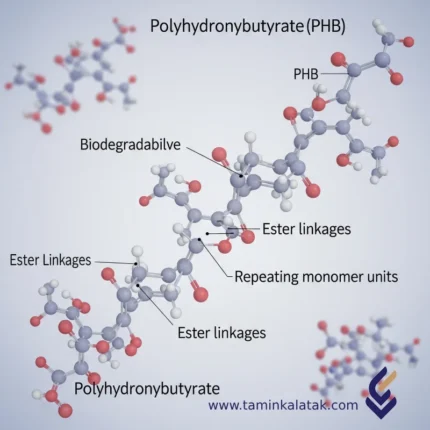
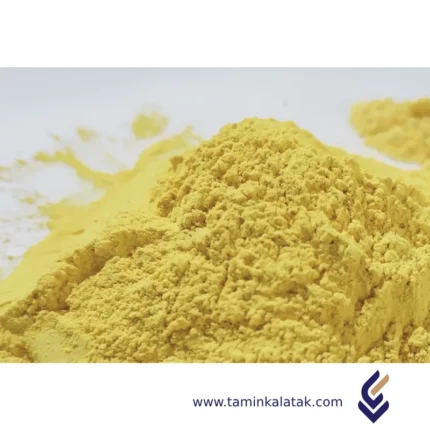
Polyhydroxybutyrate (PHB) is a member of the polyhydroxyalkanoate (PHA) family, recognized as a sustainable alternative to conventional plastics due to its complete biodegradability and environmental compatibility. This biopolymer is produced by microorganisms and is used across various industries, from packaging to medicine.

Structure of Polyhydroxybutyrate (PHB)

PHB is a biodegradable polyester with the chemical formula (C₄H₆O₂)ₙ. It is synthesized by certain microorganisms under specific nutrient-limited conditions (such as nitrogen deficiency). The high crystallinity of PHB (up to 60–70%) gives it mechanical strength and rigidity comparable to polypropylene (PP). However, unlike PP, PHB is completely biodegradable. Its polymer chains are generally linear, and its mechanical properties depend on the molecular weight and production conditions.

Properties of Polyhydroxybutyrate (PHB)

  • Biodegradability: Completely decomposed by microorganisms in natural environments such as soil, seawater, and compost.

  • Biocompatibility: Non-toxic and suitable for medical applications.

  • Mechanical strength: Hardness and tensile strength comparable to conventional plastics like polypropylene.

  • Thermal resistance: Melting point between 160–180°C.

  • Renewable origin: Produced from biological sources such as glucose, agricultural waste, or vegetable oils.

Applications of Polyhydroxybutyrate (PHB)

  • Packaging: Production of thin films, biodegradable bags, and disposable containers.

  • Medical field: Used in absorbable sutures, biocompatible implants, and drug delivery systems.

  • Agriculture: Biodegradable mulching films and plant pots.

  • Textile industry: Production of fibers for sustainable fabrics.

  • Industrial products: Molded parts for general-purpose applications.

Disadvantages of Polyhydroxybutyrate (PHB)

Despite its many advantages, PHB also has some limitations:

  • High production cost: Microbial fermentation and extraction processes are expensive.

  • Brittleness: High crystallinity can lead to fragility in certain applications.

  • Variable degradation rate: In low-oxygen environments, the decomposition process can be slow.

  • Limited processability: Due to its high melting temperature and viscosity, PHB can be challenging to process using some conventional methods.

Advantages of Polyhydroxybutyrate (PHB)

  • Reduced plastic pollution: Fully biodegradable in the environment, reducing dependence on petroleum-based plastics.

  • Versatile applications: Suitable for use in medical, packaging, and agricultural industries.

  • Sustainable production: Can be made from renewable and waste biomass resources.

  • High safety: Non-toxic and safe for food-contact applications.

PolyImides (PI)

Polyimide (PI) is a high-performance polymer known for its exceptional thermal stability, mechanical strength, chemical resistance, and electrical insulation properties. Unlike conventional thermoplastics, polyimides can withstand extreme temperatures, making them ideal for demanding applications in aerospace, electronics, and industrial sectors.
Structure
Polyimide (PI) is a polymer characterized by the presence of imide functional groups (-CO-N-CO-) in its molecular backbone. The structure consists of aromatic or aliphatic dianhydrides and diamines, which undergo polymerization to form highly stable, heat-resistant chains. The most common polyimides are based on aromatic structures, which contribute to their exceptional thermal stability, mechanical strength, and chemical resistance. The rigid backbone and strong intermolecular forces, such as hydrogen bonding and π-π stacking, enhance their dimensional stability and insulating properties. Depending on the formulation, polyimides can be thermosetting or thermoplastic, with variations in cross-linking and molecular arrangement affecting their processability and performance in high-temperature environments.
Properties
Polyimide exhibits exceptional thermal stability, withstanding continuous operation at temperatures above 260°C and short-term exposure to even higher temperatures without significant degradation. It has outstanding mechanical strength, high tensile modulus, and excellent wear resistance, making it suitable for demanding applications. The material also offers superior chemical resistance, remaining stable in the presence of solvents, oils, and other harsh chemicals. Its electrical insulation properties, including a low dielectric constant and high breakdown voltage, make it ideal for electronic and aerospace applications. Additionally, polyimide has low outgassing, excellent dimensional stability, and resistance to radiation, which is crucial for space and high-performance industrial environments. The combination of these properties allows polyimide to be used in extreme conditions where conventional polymers fail.
Applications of Polyimide
  • Aerospace & Automotive: Used in heat shields, engine components, and insulation materials due to high-temperature resistance.
  • Electronics & Semiconductors: Essential for flexible printed circuit boards (FPCBs), chip packaging, and wire insulation.
  • Medical & Biotechnology: Utilized in catheters, tubing, surgical devices, and membranes for medical equipment.
  • Industrial & Mechanical: Used in high-performance bearings, seals, gaskets, and wear-resistant components.
  • Optics & Photonics: Applied in optical fibers and coatings for high-temperature environments.
  • Space Exploration: Used in spacecraft insulation and radiation-resistant components due to its low outgassing properties.
Advantages of Polyimide
  • High thermal stability, capable of withstanding temperatures above 260°C.
  • Excellent mechanical strength, wear resistance, and dimensional stability.
  • Superior chemical resistance to solvents, oils, and fuels.
  • Outstanding electrical insulation properties, making it ideal for electronic applications.
  • Low outgassing and radiation resistance, suitable for aerospace and space environments.
  • Lightweight yet strong, contributing to reduced weight in automotive and aerospace applications.
Disadvantages of Polyimide
  • Difficult to process, especially for thermosetting polyimides that cannot be remelted.
  • Expensive compared to conventional polymers like polyamide (nylon) or polyethylene.
  • Brittle in some formulations, leading to reduced impact resistance.
  • Requires specialized equipment and techniques for processing and manufacturing.
  • Limited solubility in common solvents, making processing more complex.

PolyKetone (PK)

PolyKetone (PK) is a high-performance thermoplastic polymer known for its excellent mechanical properties, chemical resistance, and environmental sustainability. It is primarily composed of carbon monoxide (CO) and olefins (such as ethylene and propylene) through a catalytic polymerization process. The unique molecular structure of PK provides a balanced combination of toughness, wear resistance, and low moisture absorption, making it suitable for various industrial applications. Structure PolyKetone (PK) is a linear alternating copolymer composed of carbon monoxide (CO) and olefins such as ethylene and propylene. Its structure consists of repeating ketone (C=O) functional groups positioned between hydrocarbon units, forming a highly regular and crystalline polymer chain. This alternating arrangement of carbonyl and alkyl groups contributes to its unique mechanical strength, chemical resistance, and thermal stability. The presence of ketone groups enhances intermolecular interactions, providing superior wear resistance and low moisture absorption compared to other engineering plastics. The highly ordered molecular structure also results in excellent toughness and impact resistance, making PolyKetone a versatile material for demanding applications. Properties PolyKetone (PK) exhibits a unique combination of mechanical, thermal, and chemical properties that make it a high-performance engineering plastic. It has exceptional strength, toughness, and impact resistance, surpassing many conventional polymers such as nylon and polyoxymethylene (POM). Its high wear resistance and low friction make it ideal for applications involving moving parts and high-load conditions. PolyKetone also demonstrates excellent chemical resistance, remaining stable in the presence of acids, bases, fuels, and solvents, which enhances its durability in harsh environments. Additionally, it has low moisture absorption, ensuring dimensional stability even in humid conditions. The material offers high thermal stability, maintaining its properties over a wide temperature range, and it possesses good electrical insulating properties, making it suitable for electronic components. Furthermore, PolyKetone is environmentally friendly, as it is synthesized from carbon monoxide and olefins, reducing reliance on petroleum-based resources while offering recyclability and sustainability advantages. Advantages of PolyKetone (PK)
  • High strength, toughness, and impact resistance
  • Excellent wear resistance and low friction properties
  • Superior chemical resistance to acids, bases, fuels, and solvents
  • Low moisture absorption, ensuring dimensional stability
  • High thermal stability across a wide temperature range
  • Good electrical insulating properties for electronic applications
  • Environmentally friendly, derived from carbon monoxide and olefins
  • Recyclable and sustainable compared to petroleum-based polymers
Disadvantages of PolyKetone (PK)
  • Higher cost compared to conventional plastics like nylon and POM
  • Limited availability due to fewer manufacturers producing PK
  • Processing challenges requiring specific conditions for molding and extrusion
  • Lower heat resistance compared to some high-performance polymers like PEEK
Applications of PolyKetone (PK)
  • Automotive: Fuel system components, gears, connectors, and under-the-hood parts
  • Industrial Machinery: Bearings, seals, conveyor belts, and gears
  • Electronics: Electrical connectors, insulators, and circuit components
  • Consumer Goods: Sports equipment, power tools, and kitchen utensils
  • Medical Devices: Drug delivery components and durable medical tools
  • Oil & Gas Industry: Seals and gaskets resistant to harsh chemicals and fuels

PolyLactic Acid (PLA)

Polylactic Acid (PLA) is a biodegradable and bio-based polymer produced from natural resources such as corn starch, sugarcane, or tapioca roots. It belongs to the polyester family and is one of the most popular biopolymers used in packaging, medical, and consumer product industries.

Due to its favorable mechanical properties and biodegradability, PLA has gained a prominent position among alternatives to conventional plastics.

Structure of Polylactic Acid (PLA)

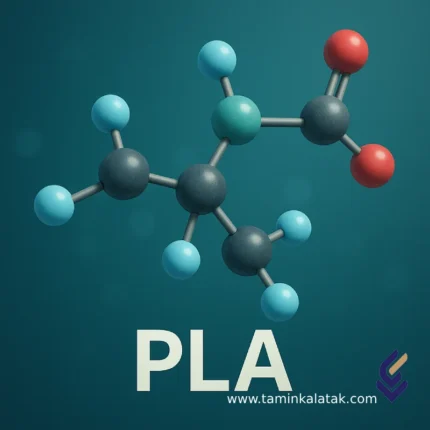
PLA is synthesized from the monomer lactide, which is obtained through the fermentation of plant-derived sugars such as dextrose. The polymer is then produced via a ring-opening polymerization process.

PLA has a linear molecular structure composed of repeating lactic acid units, chemically similar to polyesters. This structure provides moderate mechanical stability and enables biodegradability.

Properties of PLA

  • Biodegradable under industrial composting conditions

  • Derived from renewable plant-based sources

  • Non-toxic and safe for human use (suitable for medical applications)

  • High transparency and attractive appearance

  • Low density and lightweight

  • Excellent processability in injection molding and 3D printing

  • Acceptable mechanical strength

Applications of Polylactic Acid

  • Food packaging (containers, bottles)

  • 3D printing (printer filaments)

  • Production of disposable medical components (sutures, drug-delivery scaffolds)

  • Agricultural films and biodegradable packaging

  • Household, automotive, and bio-based wearable products

  • Cosmetic and personal care industries (packaging for creams and lotions)

Disadvantages of PLA

  • Low heat resistance (low softening temperature)

  • More brittle than conventional plastics

  • Requires specific conditions for biodegradation (industrial composting)

  • Relatively higher production cost compared to petrochemical polymers

  • Limited chemical resistance

Advantages of PLA

  • Fully biodegradable and environmentally friendly

  • Reduces dependence on fossil resources

  • Decreases greenhouse gas emissions during production

  • Safe for contact with food and the human body

  • Compatible with a wide range of industrial processing technologies

PolyOlefin Elastomer (POE)

Polyolefin Elastomer (POE) is a type of thermoplastic elastomer that combines the properties of both rubber and plastic. It is produced from the copolymerization of olefins, typically ethylene with either alpha-olefins or other monomers like propylene. The material is flexible, durable, and resistant to environmental factors, making it ideal for various applications.
Structure
Polyolefin Elastomer (POE) is a copolymer made from the polymerization of olefins, typically ethylene, combined with other monomers like alpha-olefins (such as 1-butene, 1-hexene, or 1-octene). The structure of POE consists of a flexible, amorphous polymer chain with a low degree of crystallinity. The polymerization process results in a random distribution of the monomers along the polymer chain, which gives the material its elastomeric properties, allowing it to stretch and return to its original shape. The ethylene segments form the backbone of the polymer, while the incorporation of alpha-olefins introduces branches into the polymer chain, enhancing the material's flexibility and reducing crystallinity. This structure enables POE to have characteristics similar to rubber while maintaining the ease of processing typical of thermoplastics. The balance of crystalline and amorphous regions provides the polymer with its desirable mechanical properties, such as low density, good elasticity, and resistance to environmental factors.
Properties
Polyolefin Elastomer (POE) is known for its combination of rubber-like flexibility and the ease of processing typical of thermoplastics. It exhibits excellent elasticity, allowing it to stretch and recover its original shape, making it ideal for applications requiring flexibility. POE has low density, which contributes to its light weight and efficient material usage. The material is highly resistant to environmental factors such as moisture, UV radiation, and a range of chemicals, making it durable and long-lasting in outdoor and industrial settings. It also has good thermal stability and can maintain its properties over a wide temperature range, though its performance is best in moderate temperatures. POE has low viscosity, which enhances its processability, allowing for easier manufacturing using methods like injection molding, extrusion, and blow molding. It is also compatible with various fillers and additives, which can be used to tailor its properties for specific applications. Overall, POE is valued for its balance of durability, flexibility, and processability, making it suitable for a wide range of applications in industries like automotive, consumer goods, and packaging.
Applications of Polyolefin Elastomer (POE)
  • Automotive: Used for seals, gaskets, weatherstripping, and interior components due to its flexibility and resistance to environmental factors.
  • Consumer Goods: Found in products like footwear, toys, soft-touch materials, and molded products that require a combination of flexibility and durability.
  • Industrial: Used in hoses, tubing, gaskets, and non-slip coatings for machinery due to its resistance to wear and chemicals.
  • Packaging: Employed in stretch films, protective coatings, and flexible packaging materials, providing excellent durability and stretchability.
  • Medical: Utilized in flexible medical components, such as tubing and device seals, due to its biocompatibility and processability.
  • Electrical: Used for wire coatings and insulation due to its electrical insulating properties.
Advantages of Polyolefin Elastomer (POE)
  • High Flexibility: Offers rubber-like flexibility while being easy to process as a thermoplastic.
  • Lightweight: Low density makes it suitable for lightweight applications.
  • Durability: Excellent resistance to moisture, UV radiation, and chemicals, contributing to a longer lifespan in outdoor and industrial environments.
  • Ease of Processing: Can be easily molded using standard thermoplastic techniques, such as extrusion and injection molding.
  • Versatile: Can be modified with additives and fillers to suit a variety of applications, providing customization of properties like hardness, flexibility, and processability.
  • Low Viscosity: Its low viscosity allows for better flow during processing, making it more efficient to work with.
Disadvantages of Polyolefin Elastomer (POE)
  • Cost: It can be more expensive than some other materials, such as conventional polyethylenes or rubbers, particularly in high-performance applications.
  • Heat Resistance: While POE offers good thermal stability, it may not perform as well as other materials at higher temperatures (e.g., above 150°C).
  • Plasticizer Migration: In some formulations, plasticizers can migrate out of the material over time, potentially affecting the physical properties or appearance.
  • Limited High-Temperature Performance: POE does not have the same high-temperature performance as other elastomers like silicones or thermoplastic vulcanizates (TPVs).
  • Environmental Impact: Though POE is relatively environmentally friendly compared to other synthetic materials, its production and disposal still contribute to environmental concerns related to plastics.

Polyols

Polyols are organic compounds that have at least two hydroxyl groups (-OH) in their structure. These hydroxyl groups give polyols the ability to react with isocyanates, resulting in the production of polyurethane. Polyurethanes are very versatile polymeric materials that have a wide range of applications in various industries.
Types of Polyols
Polyols can be divided into different groups based on their chemical structure, molecular weight, and application. Some of the important types of polyols are: Polyether polyols: These types of polyols are produced by the reaction of ethylene oxide or propylene oxide with water or a starting diol. Polyether polyols have a wide range of applications due to their high diversity in molecular weight and end groups. Polyester polyols: These types of polyols are produced from the reaction between diols and diacids or diesters of acids. Polyester polyols usually have a higher viscosity than polyether polyols. Specialty polyols: These types of polyols have special properties such as heat resistance, chemical resistance and specific mechanical properties.
Applications of polyols
As one of the main components in the production of polyurethanes, polyols play a very important role in various industries. Some of the most important applications of polyurethanes produced using polyols include: Polyurethane foams: used in thermal and acoustic insulation, furniture, packaging and automotive industries Polyurethane coatings: used in paint and coating, adhesive and sealant industries Polyurethane elastomers: used in the production of car wheels, belts and industrial coatings Polyurethane fibers: used in the production of synthetic and textile fibers
Advantages of using polyols
High diversity: Polyols are produced in different types with different properties, which allows you to choose the most suitable type of polyol for each application. Good mechanical properties: Polyurethanes produced using polyols have very good mechanical properties such as strength, hardness and flexibility. Good thermal and acoustic insulation: Polyurethanes produced using polyols are very good thermal and acoustic insulation. Good chemical resistance: Polyurethanes produced using polyols are resistant to many chemicals.