
Poly Phenylene Oxide (PPO)

Polyphenylene Oxide (PPO), also known as Polyphenylene Ether (PPE), is a high-performance thermoplastic known for its excellent mechanical, thermal, and electrical properties. It is often blended with other polymers, such as polystyrene (PS), to improve processability and lower costs.
Structure
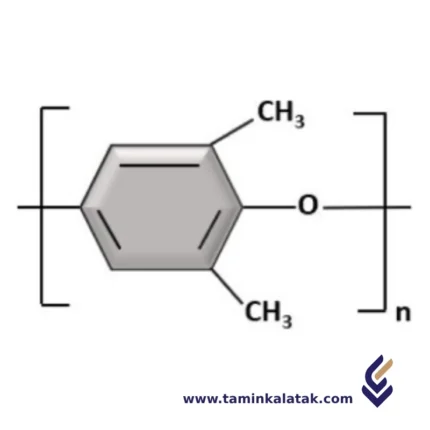
Poly Phenylene Oxide (PPO) is a high-performance engineering thermoplastic with a repeating unit structure based on the phenylene oxide group. Its molecular structure consists of a backbone of alternating phenylene rings and oxygen atoms, connected via ether linkages. The presence of these ether bonds contributes to its high thermal stability, low moisture absorption, and excellent electrical insulating properties. The polymer is typically synthesized through an oxidative coupling reaction of 2,6-dimethylphenol, using catalysts such as copper-amine complexes. PPO is often blended with polystyrene to improve its processability while retaining its desirable mechanical and thermal properties, making it suitable for applications in electrical components, automotive parts, and household appliances.
Properties
Poly Phenylene Oxide (PPO) exhibits a combination of excellent thermal, mechanical, and electrical properties, making it a widely used engineering thermoplastic. It has high heat resistance, with a glass transition temperature around 210°C, and maintains dimensional stability over a wide temperature range. PPO has low moisture absorption, contributing to its resistance to hydrolysis and making it suitable for applications in humid environments. It is inherently flame-retardant and has excellent electrical insulating properties, which are essential for electronic and electrical applications. The polymer also offers good chemical resistance to acids, bases, and certain solvents. However, in its pure form, PPO is difficult to process due to its high glass transition temperature, so it is often blended with polystyrene to improve its moldability while maintaining its desirable properties. These characteristics make PPO ideal for use in automotive parts, electrical housings, medical equipment, and fluid-handling components.
Applications of Polyphenylene Oxide
  • Electrical and electronic components such as connectors, circuit boards, and insulators due to its excellent electrical insulating properties.
  • Automotive parts including dashboards, grilles, and under-the-hood components due to its heat resistance and dimensional stability.
  • Household appliances such as microwave components, coffee makers, and dishwasher parts because of its thermal stability and moisture resistance.
  • Medical equipment including sterilizable trays and devices due to its chemical resistance and ability to withstand repeated sterilization.
  • Fluid-handling components like pump housings and valve parts due to its low moisture absorption and chemical resistance.
Advantages
  • High heat resistance and dimensional stability.
  • Excellent electrical insulating properties, making it ideal for electrical applications.
  • Low moisture absorption, enhancing its durability in humid environments.
  • Good chemical resistance against acids, bases, and solvents.
  • Inherent flame resistance, providing safety benefits in various applications.
  • Can be blended with other polymers, such as polystyrene, to improve processability and cost-effectiveness.
Disadvantages
  • Pure PPO is difficult to process due to its high glass transition temperature.
  • Prone to oxidation and degradation when exposed to UV light without stabilizers.
  • Can be expensive compared to other engineering plastics.
  • Limited resistance to certain solvents, especially aromatic and chlorinated hydrocarbons.
  • Mechanical properties may decrease when blended with polystyrene, depending on the ratio used.

Poly Tetra Fluoro Ethylene (PTFE / Teflon)

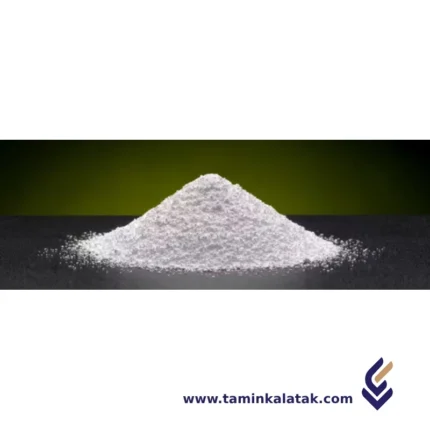
Polytetrafluoroethylene (PTFE), commonly known by the brand name Teflon, is a high-performance, white, waxy solid polymer that is well-known for its remarkable chemical resistance and low friction properties. PTFE belongs to the family of fluoropolymers and is made from the polymerization of tetrafluoroethylene (TFE) monomers.

Structure

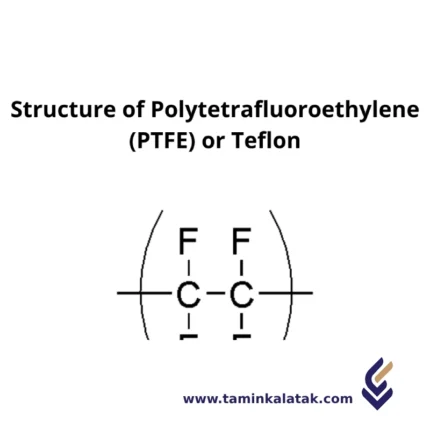
The structure of Polytetrafluoroethylene (PTFE), commonly known as Teflon, consists of a long chain of carbon atoms bonded to fluorine atoms. Each carbon atom in the polymer backbone is bonded to two fluorine atoms, creating a repeating unit of -C(F2)-C(F2)-. This configuration forms a linear polymer with a highly crystalline and tightly packed structure. The fluorine atoms surround the carbon backbone, creating a dense layer that shields the polymer from interacting with external substances. This structure is responsible for PTFE's remarkable chemical resistance, non-stick properties, and low friction. The strong carbon-fluorine bonds in the polymer make PTFE highly resistant to heat, chemicals, and electrical conductivity, contributing to its widespread use in harsh environments and various industrial applications.

Properties

Poly tetra fluoro ethylene (PTFE), commonly known as Teflon, has a range of exceptional properties that make it highly suitable for demanding applications. It has outstanding chemical resistance, being virtually unaffected by most chemicals, acids, and solvents, which makes it ideal for use in aggressive environments. PTFE is also highly heat-resistant, with the ability to withstand temperatures ranging from -200°C to 260°C (-328°F to 500°F) without degrading, maintaining its mechanical properties over a wide temperature range. Additionally, PTFE has a very low coefficient of friction, making it an excellent choice for applications requiring minimal friction, such as bearings, seals, and non-stick coatings. Its non-stick properties are widely known, particularly in cookware, where it prevents food from adhering to surfaces. PTFE is also a good electrical insulator, with excellent dielectric properties, making it ideal for use in electrical cables and insulation. Its low surface energy also provides resistance to staining, dirt, and moisture. However, PTFE can be brittle at low temperatures and requires special processing methods due to its high molecular weight. Despite these challenges, its unique combination of properties, including resistance to wear, high temperatures, and chemicals, makes it indispensable in various industries such as chemical processing, medical devices, and electronics.

Applications of PTFE (Teflon)

  • Non-Stick Cookware: Commonly used as a coating for cookware due to its non-stick properties.
  • Chemical Industry: Used in gaskets, seals, and lining for pipes and tanks because of its chemical resistance.
  • Electrical Insulation: Employed in wires, cables, and electrical components due to its excellent dielectric properties and high-temperature resistance.
  • Bearings and Bushings: Used in mechanical applications that require low friction and high durability.
  • Medical Devices: Used for catheters, grafts, and other medical devices due to its biocompatibility and chemical inertness.
  • Aerospace: Used in seals, lubricants, and fuel systems for high-performance applications in aerospace.
  • Automotive: Used in components such as seals and bearings that need to withstand high temperatures and chemical exposure.
  • Food Processing: Coatings for machinery and equipment that require non-stick surfaces or resistance to harsh cleaning agents.

Advantages of PTFE (Teflon)

  • Chemical Resistance: Virtually inert to most chemicals, acids, and solvents, making it ideal for use in harsh chemical environments.
  • High-Temperature Resistance: Can withstand a broad range of temperatures, from -200°C to 260°C, without degrading.
  • Low Friction: PTFE has a very low coefficient of friction, reducing wear and improving performance in moving parts.
  • Non-Stick Properties: Its non-stick nature makes it useful for cookware and other applications where minimal adhesion is required.
  • Electrical Insulation: Excellent electrical insulating properties, ideal for use in cables and electrical components.
  • Weather Resistance: Resistant to UV radiation and weathering, suitable for outdoor applications.
  • Durability: Long-lasting material with high mechanical strength when reinforced.

Disadvantages of PTFE (Teflon)

  • Brittleness at Low Temperatures: PTFE becomes brittle at very low temperatures, making it unsuitable for certain cold environment applications unless reinforced.
  • Processing Difficulty: PTFE requires specific processing methods such as sintering and molding, which can be challenging and costly.
  • Low Mechanical Strength: Pure PTFE has low mechanical strength and may need reinforcement (e.g., with glass fibers) for structural applications.
  • Expensive: PTFE is relatively expensive compared to other polymers, making it less cost-effective for some applications.
  • Limited Wear Resistance: While it has low friction, PTFE can wear over time under heavy load-bearing conditions unless enhanced with fillers.

Polyacrylamide

Lorem ipsum dolor sit amet, consectetur adipiscing elit. Vestibulum sagittis orci ac odio dictum tincidunt. Donec ut metus leo. Class aptent taciti sociosqu ad litora torquent per conubia nostra, per inceptos himenaeos. Sed luctus, dui eu sagittis sodales, nulla nibh sagittis augue, vel porttitor diam enim non metus. Vestibulum aliquam augue neque. Phasellus tincidunt odio eget ullamcorper efficitur. Cras placerat ut turpis pellentesque vulputate. Nam sed consequat tortor. Curabitur finibus sapien dolor. Ut eleifend tellus nec erat pulvinar dignissim. Nam non arcu purus. Vivamus et massa massa.

Polyamide Fiber Compounds

Polyamide fiber compounds, commonly known as nylon-based materials, are high-performance engineering polymers widely used for their excellent mechanical strength, durability, and chemical resistance. These fiber compounds are primarily based on PA6 (Nylon 6) and PA66 (Nylon 6,6), with variations including PA11, PA12, PA46, PA6T, and others for specialized applications. They can be modified with additives to enhance properties such as flame retardancy, UV resistance, and thermal stability.

Structure Polyamide fiber compounds

Polyamide fiber compounds are composed of long-chain synthetic polymers formed through the polymerization of diamines and dicarboxylic acids or lactams. The repeating amide (-CONH-) linkage in their molecular structure provides strength, flexibility, and thermal stability. The backbone of polyamide fibers consists of hydrogen bonds between adjacent polymer chains, contributing to their high tensile strength and resistance to wear. The structure can be modified by incorporating reinforcements such as glass fibers, flame-retardant additives, or UV stabilizers to enhance specific properties. Depending on the type, polyamide compounds may exhibit varying degrees of crystallinity, influencing their mechanical performance, moisture absorption, and processability. The arrangement of molecular chains affects characteristics such as melting point, durability, and elasticity, making polyamide fiber compounds suitable for demanding applications in textiles, automotive components, and industrial materials.

Properties Polyamide fiber compounds

Polyamide fiber compounds possess a combination of high mechanical strength, flexibility, and durability, making them suitable for various demanding applications. They exhibit excellent tensile strength and abrasion resistance, allowing them to withstand mechanical stress and wear over time. Their thermal stability enables them to perform well under elevated temperatures, with some grades maintaining integrity above 200°C. These compounds also offer good chemical resistance to oils, solvents, and fuels, making them ideal for automotive and industrial applications. However, polyamides tend to absorb moisture, which can affect dimensional stability and mechanical properties. The addition of reinforcements such as glass fibers or flame-retardant additives can enhance stiffness, fire resistance, and environmental stability. Polyamide fiber compounds also have good impact resistance and elasticity, making them well-suited for textiles, electrical components, and high-performance engineering applications.

Applications Polyamide fiber compounds

  • Textiles: Used in clothing, carpets, upholstery, and industrial fabrics due to their durability and flexibility.
  • Automotive: Applied in fuel lines, air intake manifolds, connectors, and under-the-hood components for heat and chemical resistance.
  • Electronics & Electricals: Used in wire insulation, circuit breakers, switch housings, and connectors due to their electrical insulating properties.
  • Industrial Uses: Found in conveyor belts, ropes, filtration systems, and high-performance engineering parts.
  • Sports & Outdoor Equipment: Utilized in climbing ropes, fishing lines, and sportswear for strength and resilience.

Advantages Polyamide fiber compounds

  • High mechanical strength and wear resistance, ensuring long-lasting performance.
  • Excellent thermal stability, withstanding high temperatures in industrial and automotive applications.
  • Good chemical resistance against oils, fuels, and solvents.
  • Lightweight compared to metals, making it suitable for weight-sensitive applications.
  • Flexible and elastic, allowing for diverse applications in textiles and engineering.
  • Can be modified with additives for flame retardancy, UV resistance, and enhanced performance.

Disadvantages Polyamide fiber compounds

  • High moisture absorption, which can affect dimensional stability and mechanical properties.
  • Processing challenges due to high melting points and specific drying requirements.
  • Susceptibility to degradation under prolonged UV exposure without stabilizers.
  • Can be more expensive than other synthetic fibers, especially high-performance grades.

PolyAmide-Imide (PAI)

Polyamide-imide (PAI) is a high-performance thermoplastic known for its exceptional mechanical, thermal, and chemical resistance properties. It is commonly used in demanding applications requiring strength, wear resistance, and high-temperature stability.
Structure
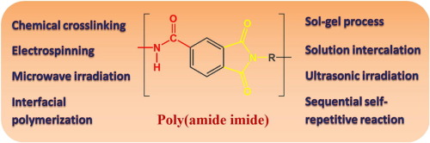
Polyamide-imide (PAI) is a high-performance thermoplastic polymer characterized by the presence of both amide (-CONH-) and imide (-CO-N-CO-) functional groups in its molecular backbone. The structure consists of aromatic rings connected by these amide and imide linkages, which contribute to its exceptional thermal and mechanical properties. The aromatic nature of PAI enhances rigidity and stability, while the amide groups provide flexibility and processability. The imide groups, known for their high thermal resistance, contribute to PAI’s ability to withstand extreme temperatures without significant degradation. This unique combination of structural elements results in a polymer that exhibits excellent strength, wear resistance, and chemical stability, making it ideal for demanding industrial applications.
Properties
Polyamide-imide (PAI) exhibits a unique combination of high mechanical strength, excellent thermal stability, and outstanding wear resistance, making it one of the most durable engineering thermoplastics. It maintains its mechanical integrity at elevated temperatures, with a continuous service temperature of up to 260°C and short-term exposure tolerances even higher. PAI has exceptional resistance to wear, friction, and creep, allowing it to perform reliably in high-load and high-speed applications. Its chemical resistance is superior, withstanding exposure to most solvents, fuels, and acids. Additionally, PAI demonstrates excellent electrical insulating properties, ensuring stability in electrical and electronic applications. With low thermal expansion and high dimensional stability, it retains its shape and structural performance under extreme conditions. These properties make PAI an ideal choice for aerospace, automotive, industrial, and electronic applications where strength, heat resistance, and durability are critical.
Applications of Polyamide-Imide (PAI):
  • Aerospace & Automotive: High-performance bearings, bushings, seals, thrust washers, and gears.
  • Industrial Equipment: Pump components, compressor vanes, and wear-resistant parts.
  • Oil & Gas Industry: Components for high-pressure and high-temperature environments.
  • Electronics & Electrical: High-temperature insulators, connectors, and semiconductor components.
  • Medical Devices: Sterilization-resistant parts used in surgical instruments.
  • Textile & Printing Industry: Rollers, guides, and wear-resistant coatings.
Advantages of Polyamide-Imide (PAI):
  • High Temperature Resistance: Can operate continuously at temperatures up to 260°C (500°F).
  • Exceptional Wear & Friction Resistance: Ideal for applications requiring durability and longevity.
  • High Mechanical Strength & Stiffness: Retains its structural integrity under heavy loads.
  • Good Chemical Resistance: Withstands exposure to fuels, solvents, and acids.
  • Excellent Electrical Insulation Properties: Performs well in high-temperature electrical applications.
  • Dimensional Stability: Low thermal expansion and minimal deformation under stress.
Disadvantages of Polyamide-Imide (PAI):
  • High Cost: More expensive than conventional engineering plastics.
  • Difficult to Process: Requires specialized molding or machining techniques due to its high melting point.
  • Hygroscopic Nature: Absorbs moisture, which can affect dimensional stability in humid environments.
  • Brittle Compared to Some Polymers: While strong, it can be prone to cracking under high impact.

PolyAmides (PA)

Polyamide (PA) is a class of synthetic polymers containing amide (-CONH-) linkages, commonly known as nylons. It is known for its high mechanical strength, thermal stability, and chemical resistance, making it widely used in automotive, textiles, and industrial applications. Polyamides can be processed through methods like injection molding and extrusion, offering versatility in manufacturing.
Structure
Polyamide has a molecular structure characterized by repeating amide (-CONH-) linkages along the polymer chain, formed through the condensation polymerization of diamines and dicarboxylic acids or the ring-opening polymerization of lactams. The presence of hydrogen bonding between adjacent amide groups contributes to the polymer's high mechanical strength, thermal stability, and resistance to wear and chemicals. Depending on the type of polyamide, the backbone structure can be either aliphatic, as in Nylon 6 and Nylon 66, or aromatic, as in aramids like Kevlar and Nomex, which provide even greater rigidity and heat resistance. This structural diversity allows polyamides to be tailored for various industrial and commercial applications.
Properties
Polyamide exhibits a combination of excellent mechanical, thermal, and chemical properties, making it a highly versatile material. It has high tensile strength, toughness, and wear resistance, which contribute to its durability in demanding applications. The polymer's strong hydrogen bonding provides good thermal stability, allowing it to withstand elevated temperatures without significant degradation. Polyamide also offers good chemical resistance to oils, greases, and solvents, although it can absorb moisture, which may affect its mechanical properties and dimensional stability. Additionally, it has low friction and self-lubricating characteristics, making it ideal for applications requiring smooth movement and reduced wear. With good electrical insulation properties and ease of processing through methods like injection molding and extrusion, polyamide is widely used in automotive, aerospace, electronics, and industrial applications.
Applications of Polyamide
  • Automotive components such as gears, bearings, fuel lines, and engine covers
  • Electrical and electronic parts including connectors, cable insulation, and circuit breakers
  • Industrial machinery components like conveyor belts, rollers, and fasteners
  • Textiles and fibers used in clothing, carpets, ropes, and parachutes
  • Aerospace applications such as lightweight structural components and insulation materials
  • Consumer goods including sports equipment, kitchen utensils, and zippers
  • Medical applications like surgical sutures and implantable devices
Advantages of Polyamide
  • High mechanical strength, toughness, and durability
  • Excellent wear and abrasion resistance
  • Good thermal stability and high melting point
  • Resistant to many chemicals, oils, and solvents
  • Low friction and self-lubricating properties
  • Good electrical insulation properties
  • Lightweight and easily moldable for various applications
Disadvantages of Polyamide
  • Absorbs moisture, which can affect mechanical properties and dimensional stability
  • Can degrade under prolonged exposure to UV light unless stabilized with additives
  • Susceptible to attack by strong acids and bases
  • Higher processing temperatures required for manufacturing
  • Can be more expensive compared to some other polymers

Polyarylate (PAR)

Polyarylate (PAR) is a type of high-performance aromatic polyester known for its excellent thermal stability, mechanical strength, and resistance to chemicals and UV radiation. It is commonly used in engineering applications where durability and heat resistance are required.
Structure
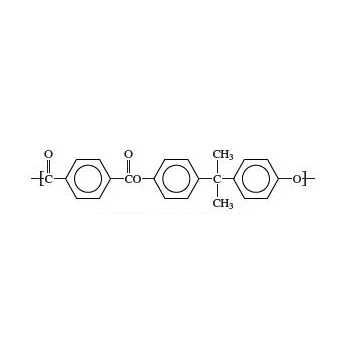
Polyarylate (PAR) is a high-performance thermoplastic polymer composed of repeating aromatic ester units in its backbone. Its structure consists of aromatic rings (benzene) connected by ester (-COO-) linkages, giving it excellent thermal and mechanical properties. The presence of these rigid benzene rings enhances the polymer’s strength, dimensional stability, and resistance to heat and UV radiation. Unlike aliphatic polyesters, which have flexible carbon chains, the rigid aromatic backbone of polyarylates prevents easy molecular rotation, making the material more heat-resistant and mechanically robust. A common type of polyarylate is based on bisphenol A (BPA) and terephthalic or isophthalic acid, forming a polymer with a high glass transition temperature and excellent durability. This unique structure makes polyarylates ideal for applications requiring transparency, heat resistance, and chemical stability, such as optical lenses, automotive parts, and electronic components.
Properties
Polyarylate (PAR) exhibits a combination of high thermal stability, mechanical strength, and chemical resistance, making it a valuable engineering thermoplastic. It has a high glass transition temperature (Tg) of around 180°C, allowing it to retain its shape and strength under elevated temperatures. Its excellent mechanical properties, including high tensile strength and toughness, make it resistant to wear and impact. Additionally, PAR has outstanding UV and weather resistance, preventing degradation when exposed to sunlight, making it suitable for outdoor applications. The polymer is also chemically resistant to oils, acids, and solvents, ensuring durability in harsh environments. Many grades of polyarylate are optically transparent, making them useful for lenses and display applications. Furthermore, it exhibits good dimensional stability and low creep, ensuring reliability in precision applications like electronic components and automotive parts. These properties collectively make PAR an ideal material for high-performance applications where strength, heat resistance, and durability are essential.
Applications of Polyarylate (PAR):
  • Electronics & Electrical Components – Used in connectors, insulators, and circuit boards due to its heat and electrical resistance.
  • Automotive Parts – Ideal for components exposed to high temperatures and mechanical stress.
  • Aerospace Industry – Used in structural components for its lightweight and high durability.
  • Optical Lenses & Displays – Some grades are optically clear, making them suitable for eyewear, camera lenses, and LCD panels.
  • Medical Devices – Resistant to sterilization methods and biocompatible for certain medical applications.
  • Industrial Machinery – Used in gears, seals, and mechanical components requiring high strength and wear resistance.
  • Consumer Goods – Found in high-end cookware, protective coatings, and UV-resistant outdoor products.
Advantages of Polyarylate (PAR):
  • High heat resistance – Maintains strength at elevated temperatures.
  • Excellent mechanical strength – High tensile strength and impact resistance.
  • UV and weather resistance – Ideal for outdoor applications without degradation.
  • Good chemical resistance – Withstands exposure to oils, acids, and solvents.
  • Optical clarity – Some grades are transparent, useful for lenses and displays.
  • Dimensional stability – Low creep and high rigidity for precision applications.
Disadvantages of Polyarylate (PAR):
  • Expensive – Higher cost compared to conventional plastics.
  • Difficult processing – Requires specialized equipment and high processing temperatures.
  • Brittle in some conditions – May be prone to stress cracking under certain loads.
Limited availability – Less commonly used than other engineering plastics, leading to fewer commercial grades.

PolyArylEtherKetone (PAEK)

PolyArylEtherKetone (PAEK) is a family of high-performance, semi-crystalline thermoplastics known for their excellent mechanical properties, thermal stability, and chemical resistance. These polymers contain aromatic rings connected by ether (-O-) and ketone (-CO-) linkages, which contribute to their strength and durability.
Structure
The structure of PolyArylEtherKetone (PAEK) consists of a repeating backbone of aromatic rings (aryl groups) connected by ether (-O-) and ketone (-CO-) linkages. These alternating ether and ketone groups provide a unique combination of flexibility and rigidity, contributing to the polymer's high thermal stability, chemical resistance, and mechanical strength. The presence of aromatic rings enhances structural integrity, making the polymer highly resistant to degradation under extreme conditions. The ether linkages add flexibility to the molecular chain, improving processability, while the ketone groups increase the polymer’s resistance to heat and oxidation. The semi-crystalline nature of PAEK arises from the ability of the polymer chains to pack efficiently in an ordered manner, leading to excellent wear resistance and high mechanical performance. Different types of PAEK, such as PEEK, PEK, and PEKK, vary in the arrangement and proportion of these functional groups, influencing their thermal and mechanical properties. This unique molecular structure makes PAEK an ideal choice for high-performance applications in aerospace, medical, automotive, and industrial sectors.
Properties
PolyArylEtherKetone (PAEK) is a high-performance, semi-crystalline thermoplastic known for its exceptional mechanical, thermal, and chemical properties. It exhibits excellent strength, stiffness, and wear resistance, making it ideal for demanding applications in aerospace, automotive, medical, and oil and gas industries. PAEK has outstanding thermal stability, withstanding continuous use temperatures of up to 250°C, while also demonstrating remarkable resistance to chemicals, including acids, bases, and organic solvents. It possesses low moisture absorption, ensuring dimensional stability even in humid environments. Furthermore, PAEK offers excellent fatigue resistance, making it suitable for long-term load-bearing applications. Its inherent flame retardancy and low smoke emission enhance safety in high-temperature environments. Additionally, PAEK maintains excellent electrical insulation properties, making it valuable for electronic and electrical applications. These unique characteristics make PAEK an advanced material choice for extreme engineering conditions.
Applications of PolyArylEtherKetone (PAEK):
  • Aerospace & Automotive: Used in structural components, bearings, and bushings due to its lightweight, high strength, and temperature resistance.
  • Medical Devices: Ideal for implants, surgical instruments, and dental components due to biocompatibility and sterilization resistance.
  • Oil & Gas Industry: Used in seals, valves, and insulators for its excellent chemical and high-temperature resistance.
  • Electronics & Electrical: Utilized in connectors, insulators, and semiconductor manufacturing for its electrical insulation and heat resistance.
  • Industrial & Manufacturing: Used in gears, pumps, and wear-resistant parts due to its high mechanical strength and low friction.
Advantages of PolyArylEtherKetone (PAEK):
  • High Thermal Stability: Can withstand continuous temperatures up to 250°C.
  • Excellent Mechanical Properties: High strength, stiffness, and impact resistance.
  • Chemical Resistance: Withstands harsh chemicals, acids, and solvents.
  • Low Moisture Absorption: Ensures dimensional stability in humid environments.
  • Good Wear & Fatigue Resistance: Ideal for long-term, high-load applications.
  • Flame Retardant & Low Smoke Emission: Enhances safety in high-temperature applications.
  • Biocompatibility: Suitable for medical implants and surgical devices.
Disadvantages of PolyArylEtherKetone (PAEK):
  • High Cost: More expensive than conventional plastics and some high-performance polymers.
  • Difficult Processing: Requires high temperatures and specialized equipment for manufacturing.
  • Limited Availability: Not as widely produced as other engineering plastics, leading to supply constraints.
  • Brittleness at Low Temperatures: Can become less impact-resistant in extreme cold conditions.

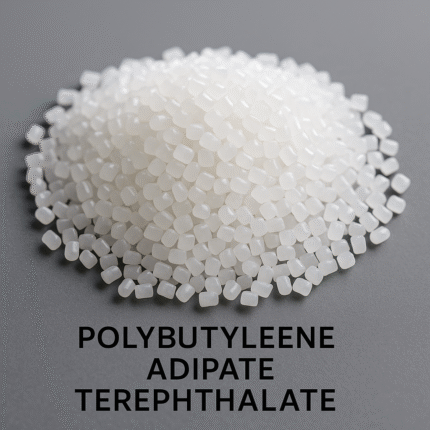
PolyButylene Adipate Terephthalate (PBAT)

Poly(butylene adipate-co-terephthalate) (PBAT) is a biodegradable thermoplastic polymer that is widely used in environmentally friendly applications. It is synthesized from butylene adipate and butylene terephthalate, offering properties such as high flexibility, good impact resistance, and biodegradability. PBAT is recognized as a suitable alternative to conventional plastics like polyethylene, particularly in packaging, shopping bags, and agricultural films.

Structure of Poly(butylene adipate-co-terephthalate)

The chemical structure of PBAT consists of repeating units derived from adipic acid (AA), 1,4-butanediol (BDO), and terephthalic acid (TPA). This structure imparts PBAT with unique physical and mechanical properties, including high flexibility and adequate strength.

Structurally, PBAT is positioned between rigid polyesters (such as PET) and soft polyesters (such as PCL), which allows it to be used across a wide range of applications.

Properties of PBAT

  • Fully biodegradable under industrial composting conditions

  • Flexible and resistant to tearing

  • Processable using standard thermoplastic machinery

  • Good chemical resistance

  • Excellent transparency and aesthetic appearance for packaging

  • Compatible with other biopolymers such as PLA and starch

Applications of PBAT

  • Biodegradable shopping and garbage bags

  • Agricultural films and biodegradable mulch films

  • Food packaging materials

  • Environmental protective coatings

  • Injection-molded short-life components

  • Blends with PLA to enhance flexibility

Advantages of PBAT

  • Completely biodegradable under industrial composting conditions

  • Effective replacement for conventional petroleum-based plastics

  • Maintains acceptable mechanical performance

  • Certified under many biodegradability standards (such as EN13432 and ASTM D6400)

  • Reduces environmental plastic pollution

Disadvantages of PBAT

  • Higher cost compared to conventional plastics

  • Ineffective degradation in natural environments without proper composting conditions

  • Higher sensitivity to moisture and heat during storage

  • Requires blending with other polymers to optimize performance for certain applications

PolyButylene Succinate-co-Adipate (PBSA)

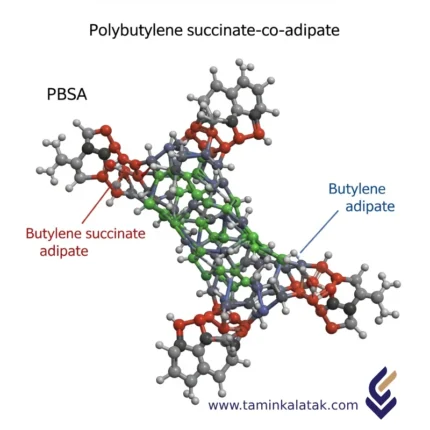
Poly(butylene succinate-co-adipate) (PBSA) is a biodegradable polyester synthesized from the combination of butylene succinate and butylene adipate. This polymer is designed to reduce environmental impacts and can be produced from either renewable resources or fossil fuels. Due to its favorable mechanical properties and excellent processability, PBSA is widely used as an alternative to conventional plastics in various applications.

Structure

PBSA has a copolymeric structure consisting of butylene succinate and butylene adipate units. This structure enhances flexibility and lowers the glass transition temperature (Tg) of the polymer. The presence of ester linkages in the main polymer chain enables biodegradability.

Properties

  • Biodegradable under industrial composting conditions

  • Higher flexibility compared to poly(butylene succinate) (PBS)

  • Good resistance to stress cracking

  • Excellent processability using extrusion, injection molding, and blow molding methods

  • Compatible with other biodegradable polymers such as PLA and TPS

Applications

Due to its unique combination of properties, PBSA is used in a variety of industries, including:

  • Production of compostable bags

  • Food and agricultural packaging

  • Agricultural films and biodegradable mulches

  • Biodegradable medical products

  • Environmentally friendly disposable containers

Disadvantages

  • Higher cost compared to conventional petroleum-based polymers

  • Reduced mechanical properties in humid environments

  • Requires specific conditions for complete degradation (industrial composting)

Advantages

  • Reduces negative environmental impacts

  • Compatible with conventional plastic manufacturing processes

  • Approved for food contact by international standards (FDA, EU)
PolyButylene Terephthalate (PBT)

Polybutylene Terephthalate (PBT) is a high-performance thermoplastic polyester known for its excellent mechanical, electrical, and thermal properties. It is widely used in electrical and automotive industries due to its strength, chemical resistance, and dimensional stability.
Structure
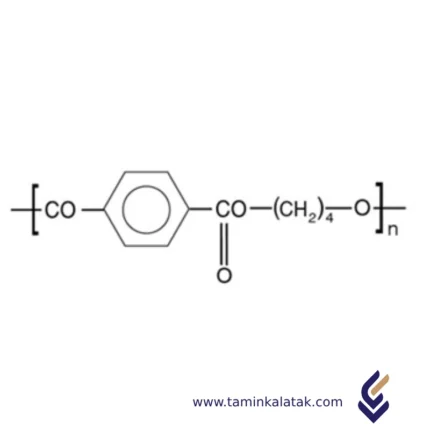
Polybutylene Terephthalate (PBT) is a thermoplastic polyester composed of repeating ester functional groups in its molecular structure. It is synthesized through the polycondensation of terephthalic acid or dimethyl terephthalate with 1,4-butanediol. The resulting polymer consists of long-chain macromolecules with alternating aromatic terephthalate units and flexible butylene segments. This combination provides a balance of rigidity from the aromatic rings and flexibility from the aliphatic segments. The ester bonds contribute to its thermal stability and chemical resistance, while the linear structure allows for good crystallinity, which enhances its mechanical strength and dimensional stability. The semi-crystalline nature of PBT also contributes to its excellent electrical insulating properties and resistance to moisture absorption, making it widely used in engineering applications.
Properties
Polybutylene Terephthalate (PBT) is a semi-crystalline thermoplastic polyester known for its excellent mechanical, thermal, and electrical properties. It has high tensile strength, stiffness, and impact resistance, making it suitable for demanding engineering applications. PBT exhibits good thermal stability and can withstand high temperatures without significant deformation. Its low moisture absorption ensures dimensional stability, even in humid environments. The polymer is highly resistant to chemicals, including oils, solvents, and fuels, which enhances its durability in harsh conditions. Additionally, PBT possesses excellent electrical insulating properties, making it ideal for electronic and electrical applications. Some grades of PBT are also flame retardant, providing added safety in applications where fire resistance is required. The material is easy to process through injection molding and extrusion, offering versatility in manufacturing various components.
Applications of Polybutylene Terephthalate (PBT)
  • Electrical and Electronics: Connectors, switches, circuit breakers, coil bobbins, and insulators.
  • Automotive Industry: Headlamp housings, ignition system components, fuel system parts, and sensors.
  • Consumer Goods: Appliance housings, power tool casings, keyboard keycaps, and toothbrush bristles.
  • Industrial Components: Gears, bearings, pump housings, and mechanical parts requiring high wear resistance.
  • Medical Equipment: Certain grades are used in medical devices due to their chemical resistance and stability.
Advantages of Polybutylene Terephthalate (PBT)
  • High strength, stiffness, and toughness, providing durability.
  • Excellent thermal stability, allowing it to withstand high temperatures.
  • Low moisture absorption, ensuring dimensional stability.
  • Strong resistance to chemicals, oils, and solvents.
  • Good electrical insulation properties, making it ideal for electrical applications.
  • Easy to process through injection molding and extrusion.
  • Certain grades offer flame retardancy for enhanced safety.
Disadvantages of Polybutylene Terephthalate (PBT)
  • Lower impact resistance compared to some other engineering plastics.
  • Can degrade under prolonged UV exposure unless stabilized with additives.
  • Brittle at very low temperatures, limiting its use in extreme cold environments.
  • Slightly lower strength and stiffness compared to Polyethylene Terephthalate (PET).
  • Can be prone to hydrolysis under prolonged exposure to hot water or steam.

PolyCaproLactone (PCL)

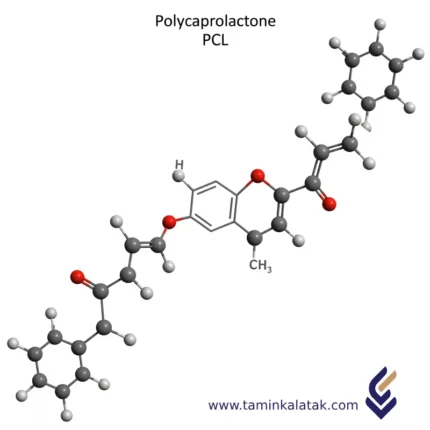
Polycaprolactone (PCL) is an organic, biodegradable polyester produced through the ring-opening polymerization (ROP) of the monomer ε-caprolactone.

Structure of Polycaprolactone (PCL)

The chemical formula of its repeating unit is:
(C₆H₁₀O₂)ₙ

PCL has a semi-crystalline chain structure with flexible polymer chains and a relatively low melting temperature (around 60°C), allowing it to be easily blended with other polymers and reinforcing materials.

Properties of Polycaprolactone

  • Low melting temperature: approximately 58–63°C

  • Glass transition temperature (Tg): around –60°C

  • Excellent processability: suitable for injection molding, extrusion, and 3D printing

  • Biodegradability: decomposes under environmental or industrial composting conditions

  • Biocompatibility: suitable for medical and pharmaceutical applications

  • High flexibility: retains elasticity even at low temperatures

Applications of Polycaprolactone

  • Medical and pharmaceutical uses: absorbable sutures, drug delivery systems, tissue engineering scaffolds

  • 3D printing and rapid prototyping: due to its low melting temperature and precise printability

  • Biodegradable products: compostable bags, packaging, and films

  • Polymer blending: used as an additive to improve flexibility or lower the melting point of other polymers such as PLA

Advantages of Polycaprolactone

  • Biodegradable and environmentally friendly

  • Flexible even at low temperatures

  • Excellent compatibility with other polymers

  • Non-toxic and safe for medical applications

  • Good dimensional stability during processing

Disadvantages of Polycaprolactone

  • Relatively high production cost compared to common polymers

  • Low melting temperature, making it unsuitable for high-temperature applications

  • Slow degradation rate under natural conditions (without industrial composting)

  • Lower mechanical strength compared to some thermoplastics such as PET or ABS