




N-butyl Acetate
N-butyl Acetate, also known as butyl ethanoate, is an organic compound commonly used as a solvent.
It is a chemical compound with the molecular formula C6H12O2, CAS: 123-86-4. It is commonly used as a solvent in the production of varnishes, inks and adhesives. The product is a colorless liquid with a fruity odor. It is highly flammable with a flash point of 24 °C. It is highly miscible with all common organic solvents (alcohols, ketones, glycols, esters) but has little miscibility in water.
Characteristics
Appearance: Colorless liquid
Odor: Fruity aroma, often described as similar to banana or apple
Chemical Formula: C₆H₁₂O₂
Flammability: Highly flammable with a flashpoint of 22°C (72°F)
N-butyl Acetate ApplicationsIndustrial Applications: Widely used as a solvent in the production of lacquers, coatings, inks, and adhesives.
- Food Industry: Found naturally in many types of fruit and used as a flavoring agent.
- Process solvents
- Fragrance ingredients
- LCD displays
N-propyl Acetate
N-propyl Acetate, also known as propyl ethanoate, is an organic ester.
Characteristics
Appearance: Colorless liquid
Odor: Mild, fruity smell, often described as similar to pears
Chemical Formula: C₅H₁₀O₂
Flammability: Highly flammable with a flashpoint of 10°C (50°F)
Solubility: Slightly soluble in water, soluble in most organic solvents
N-propyl Acetate ApplicationsIndustrial Applications: Used as a solvent in lacquers, coatings, inks, and adhesives Cosmetic Industry: Found in perfumes and other fragrance products Food Industry: Used as a flavoring agent due to its pleasant aroma Properties Boiling Point: Approximately 102°C (216°F) Density: 0.89 g/cm³ at 20°C N-propyl acetate is valued for its pleasant aroma and good solvency properties, making it a versatile solvent in various industries. However, due to its flammability, proper handling and storage are essential.
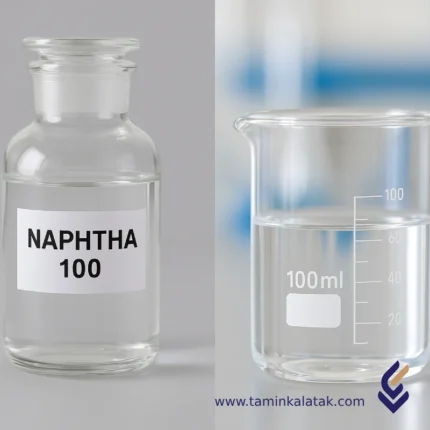
Nafta 100
Naphtha 100 is a liquid mixture of aliphatic and aromatic hydrocarbons with short to medium carbon chains. It is obtained from the distillation of crude oil and is known as a highly volatile industrial solvent.
Naphtha 100 typically has a boiling range of 100–150°C and a density between 0.75 and 0.78 g/cm³.
CAS Number: 64742-48-9 (Hydrotreated Light Naphtha)
General Chemical Formula: C₅–C₁₀ (mixture of hydrocarbons)
Appearance: Colorless, transparent liquid
Odor: Mild petroleum-like odor
Properties of Naphtha 100
-
High Volatility: Due to its relatively low boiling point, it evaporates quickly.
-
Strong Solvency: Capable of dissolving various resins, oils, and fats.
-
Flammability: Highly flammable (Flammable Liquid, Category 2 – GHS) and must be handled with care.
-
Colorless and Clear: Its transparent appearance makes it useful in various applications.
Applications of Naphtha 100
Paints and Coatings Industry: Used as a solvent in the production of paints and varnishes.
Printing Industry: Used in the manufacture of printing inks and cleaning agents.
Adhesives and Resins Industry: Serves as a solvent and diluent for resins and adhesives.
Automotive Industry: Used in car care products such as waxes and cleaners.
Textile Industry: Applied in fabric cleaning and preparation processes.
Petrochemical Industry: Used as a feedstock for the production of chemicals and fuels.
Advantages of Naphtha 100
-
High Solvency Power: Excellent ability to dissolve a wide range of substances.
-
Fast Evaporation: Reduces drying time in various applications.
-
Availability: Readily available in the market at a reasonable cost.
-
Versatility: Can be used across multiple industries.
Disadvantages of Naphtha 100
-
High Flammability: Requires careful handling and storage.
-
Health Risks: Inhalation of vapors may cause dizziness, headaches, respiratory irritation, and, with prolonged exposure, may damage the nervous system and liver.
-
Environmental Impact: If spilled or improperly disposed of, it can harm the environment and surface waters.
-
Chemical Incompatibility: May react with strong oxidizing agents.
Safety and Storage of Naphtha 100
GHS Hazards:
-
H225: Highly flammable liquid and vapor.
-
H304: May be fatal if swallowed and enters airways.
-
H336: May cause drowsiness or dizziness.
-
H411: Toxic to aquatic life with long-lasting effects.
Safety Precautions
-
P210: Keep away from heat, sparks, and open flames.
-
P261: Avoid breathing vapors.
-
P280: Wear protective gloves and safety goggles.
-
P301+P310: IF SWALLOWED, immediately call a poison control center or doctor.
Storage Conditions:
Store in tightly closed containers in a cool, dry, and well-ventilated area.
Keep away from heat sources and direct sunlight.
Containers must be flame-resistant and compatible with hydrocarbons.
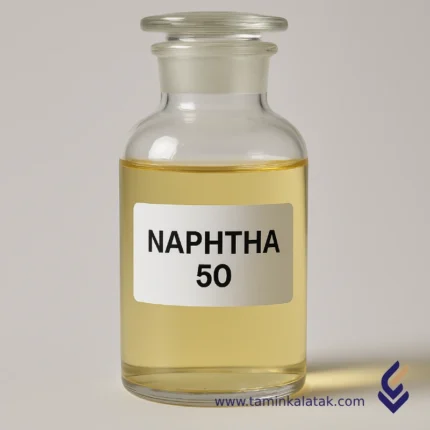
Nafta 50
Naphtha 50 is a light petroleum fraction obtained either from the direct distillation of crude oil or through petroleum cracking processes. It is a mixture of aliphatic (paraffinic) and aromatic hydrocarbons containing carbon atoms ranging from C₅ to C₁₁.
Naphtha 50 is primarily used as a feedstock for petrochemical production, industrial fuels, and as a solvent in the chemical industry.
Chemical Structure and Composition of Naphtha 50
Naphtha 50 is a complex blend of various hydrocarbons, including:
-
Paraffins (C₅–C₁₁): ~50–60%
-
Cycloparaffins (Naphthenes): ~25–35%
-
Alkylbenzenes (Aromatics): ~10–15%
-
Dicycloparaffins and heavier components: ~1–3%
This composition gives Naphtha 50 diverse physical and chemical properties, making it highly valuable for multiple industrial applications.
Technical Properties of Naphtha 50
| Property | Specification |
|---|---|
| Boiling range | 30–200 °C |
| Density (g/cm³) | 0.70–0.75 |
| Water solubility | Insoluble |
| Color | Colorless to pale yellow |
| Flash point | Very low (below 30 °C) |
| Vapor characteristics | Heavier than air; capable of forming explosive mixtures with air |
| Odor | Hydrocarbon odor, similar to gasoline |
Applications of Naphtha 50
-
Steam Cracking Feedstock
Used to produce ethylene and propylene, key monomers for polyethylene, polypropylene, and other polymers. -
Aromatics Production (BTX)
For manufacturing benzene, toluene, and xylenes used in paints, resins, solvents, and plastics. -
Industrial Solvent
Applied in paints, varnishes, resins, and specialty cleaning agents. -
Fuel
Used in lighters, camping stoves, and blended fuels. -
Refinery Processes
Serves as a solvent for refining and separating petroleum fractions.
🌟 Advantages of Naphtha 50
✅ Versatile applications — used in petrochemical, refinery, fuel, and chemical industries.
✅ Wide availability — extensively produced in refineries.
✅ Cost-effective — cheaper than many other petrochemical feedstocks and solvents.
⚠️ Disadvantages of Naphtha 50
⚠️ Highly flammable — requires strict safety measures during transport, storage, and handling.
⚠️ Environmental impact — spills or evaporation can pollute soil, water, and air.
⚠️ Price volatility — directly influenced by global crude oil prices.
Safety and Storage of Naphtha 50
Main Hazards
-
Highly flammable liquid and vapor
-
Explosion risk in enclosed spaces
-
Causes skin, eye, and respiratory irritation upon contact or inhalation
-
Chronic exposure may damage the nervous system and liver
Safety Precautions
-
Store in approved containers designed for flammable fuels
-
Keep away from heat, sparks, flames, and ignition sources
-
Ensure proper ventilation in enclosed areas
-
Use personal protective equipment (PPE): resistant gloves, safety goggles, and filter masks
-
Always follow MSDS (Material Safety Data Sheet) guidelines
NBR Reclaimed Rubber
NBR Reclaimed Rubber is a type of engineering rubber made from recycled NBR rubber products. This material has a wide range of applications in various industries due to its unique properties.
Applications of recycled NBR rubberAutomotive industry: production of gaskets, seat covers, engine parts and hoses. Oil and gas industry: production of gaskets, sealants and pump parts. Chemical industry: production of coatings, covers and pump parts. Consumer goods industry: production of toys, household appliances and sporting goods.
Advantages of using recycled NBR rubberCost reduction: Using recycled materials reduces production costs. Environmental protection: Reduction of rubber waste and reduction of raw material consumption. Good mechanical properties: It has good mechanical properties and can replace virgin NBR in many applications. Recyclability: This material is also recyclable.
Neopentyl Glycol
Neopentyl Glycol (NPG) is an organic compound with the chemical formula C₅H₁₂O₂. It is a white solid that has wide applications in various industries due to its unique properties.
Structure and PropertiesStructure: Neopentyl glycol has two hydroxyl groups (-OH) attached to a central carbon atom. This structure results in special properties such as heat and chemical resistance. Physical Properties: Solubility: It is soluble in water and many organic solvents such as alcohols, ethers, and esters. Melting Point: It is relatively high and exists as a white solid. Boiling Point: It has a high boiling point, which indicates its thermal stability.
Applications of Neopentyl GlycolPolyester Industry: The most important application of neopentyl glycol is in the production of unsaturated polyester resins. These resins are used in various industries such as industrial coatings, composites and adhesives due to their high resistance to heat, water and chemicals. Paint and Coatings Industry: Neopentyl glycol is used as an additive in the production of paints and coatings to increase their resistance to heat, sunlight and atmospheric agents. Plastics Industry: It is used as a raw material in the production of some types of plastics such as polyethylene terephthalate (PET). Lubricants Industry: It is used as an additive in the production of lubricants and plasticizers to improve their lubricating properties and thermal stability.
Advantages of Using Neopentyl GlycolHigh Heat Resistance: Resins containing neopentyl glycol have excellent heat resistance. High Water and Chemical Resistance: These resins are resistant to water, acids, bases and organic solvents. Good dimensional stability: Products made using neopentyl glycol-containing resins have good dimensional stability and are resistant to deformation. High transparency and gloss: Coatings produced using neopentyl glycol-containing resins have high transparency and gloss. Safety notes Skin and eye contact: Contact with skin and eyes can cause irritation. Inhalation: Inhalation of neopentyl glycol dust can cause respiratory tract irritation. Fire: Can ignite if heated or exposed to flame. Gloves, safety glasses and a mask should be worn when working with neopentyl glycol. Also, the workplace should be properly ventilated.
Neoprene (CR)
Lorem ipsum dolor sit amet, consectetur adipiscing elit. Vestibulum sagittis orci ac odio dictum tincidunt. Donec ut metus leo. Class aptent taciti sociosqu ad litora torquent per conubia nostra, per inceptos himenaeos. Sed luctus, dui eu sagittis sodales, nulla nibh sagittis augue, vel porttitor diam enim non metus. Vestibulum aliquam augue neque. Phasellus tincidunt odio eget ullamcorper efficitur. Cras placerat ut turpis pellentesque vulputate. Nam sed consequat tortor. Curabitur finibus sapien dolor. Ut eleifend tellus nec erat pulvinar dignissim. Nam non arcu purus. Vivamus et massa massa.
nitric acid
Lorem ipsum dolor sit amet, consectetur adipiscing elit. Vestibulum sagittis orci ac odio dictum tincidunt. Donec ut metus leo. Class aptent taciti sociosqu ad litora torquent per conubia nostra, per inceptos himenaeos. Sed luctus, dui eu sagittis sodales, nulla nibh sagittis augue, vel porttitor diam enim non metus. Vestibulum aliquam augue neque. Phasellus tincidunt odio eget ullamcorper efficitur. Cras placerat ut turpis pellentesque vulputate. Nam sed consequat tortor. Curabitur finibus sapien dolor. Ut eleifend tellus nec erat pulvinar dignissim. Nam non arcu purus. Vivamus et massa massa.
Nitrile-Butadiene Rubber NBR
Nitrile butadiene rubber is very durable and widely used, which is used in various industries due to its unique properties. This rubber is made of a copolymer of two monomers, acrylonitrile and butadiene, and by changing the ratio of these two monomers, the final properties of the rubber can be adjusted.
Features of Nitrile Butadiene Rubber (NBR)Excellent resistance to oil and fuel Abrasion and tear resistance Heat resistance High flexibility
Applications of Nitrile Butadiene Rubber (NBR)Automotive industry: production of gaskets, O-rings, hoses, belts and other parts exposed to oil and fuel. Oil and gas industry: production of hoses, gaskets and parts that come into contact with petroleum products. Chemical industry: production of gloves, protective coatings and parts of pumps and valves. Construction industry: production of sealants, insulation and protective coatings.
Non-tire Rubber Crumb/Powder
Non-tire rubber powder or crumb refers to fine rubber particles produced from recycling non-tire rubber products such as belts, hoses, gaskets, and other rubber products. This material has a wide range of applications in various industries due to its unique properties.
Applications of non-tire rubber powder or crumbConstruction industry: Production of rubber asphalt, flooring, sound and heat insulation. Automotive industry: Production of automotive parts such as gaskets, seat covers and flooring. Sports industry: Production of sports field flooring, mattresses and balls. Agricultural industry: Production of soil protection coatings.
Advantages of using non-tire rubber powder or crumbCost reduction: Using recycled materials reduces production costs. Environmental protection: Reducing the volume of rubber waste and reducing the consumption of raw materials. Suitable mechanical properties: It has good mechanical properties and can be used as a filler in many applications. Recyclability: This material is also recyclable.
Non-tire Rubber Products Testing M…
Lorem ipsum dolor sit amet, consectetur adipiscing elit. Vestibulum sagittis orci ac odio dictum tincidunt. Donec ut metus leo. Class aptent taciti sociosqu ad litora torquent per conubia nostra, per inceptos himenaeos. Sed luctus, dui eu sagittis sodales, nulla nibh sagittis augue, vel porttitor diam enim non metus. Vestibulum aliquam augue neque. Phasellus tincidunt odio eget ullamcorper efficitur. Cras placerat ut turpis pellentesque vulputate. Nam sed consequat tortor. Curabitur finibus sapien dolor. Ut eleifend tellus nec erat pulvinar dignissim. Nam non arcu purus. Vivamus et massa massa.
Nonionic Nonylphenol Based Soap
Nonylphenol ethoxylate is an important chemical compound formed as a derivative of phenol and ethylene oxide with the chemical formula C15H24O2. It is widely used in various industries as a nonionic surfactant. This compound is widely used in many industrial and domestic processes and applications due to its surface and chemical properties.


