



sulfuric acid
Sulfuric acid is one of the strongest, most widely used, and most important inorganic acids in the global chemical industry.
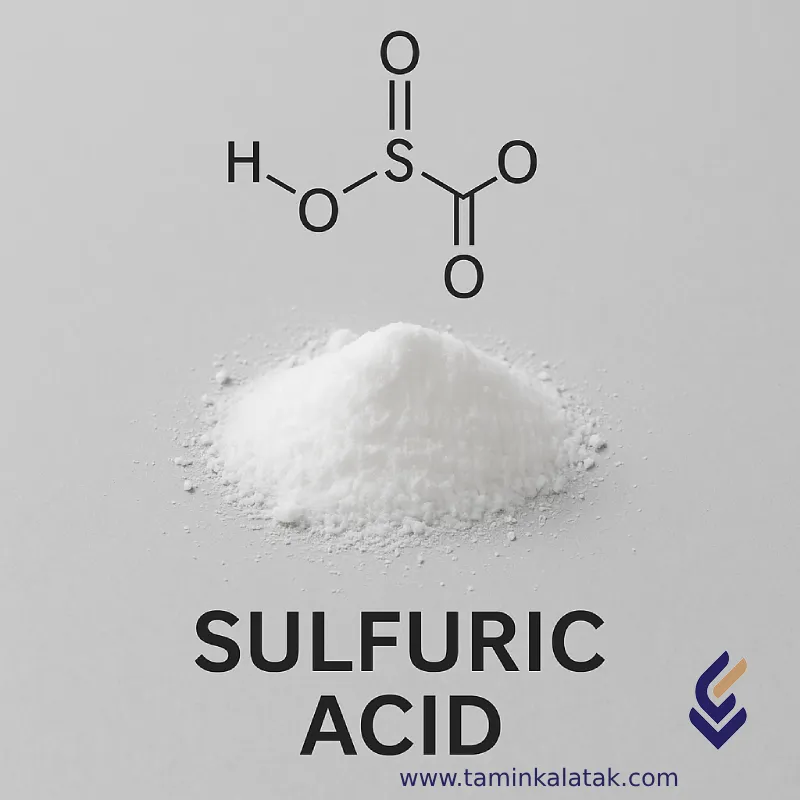
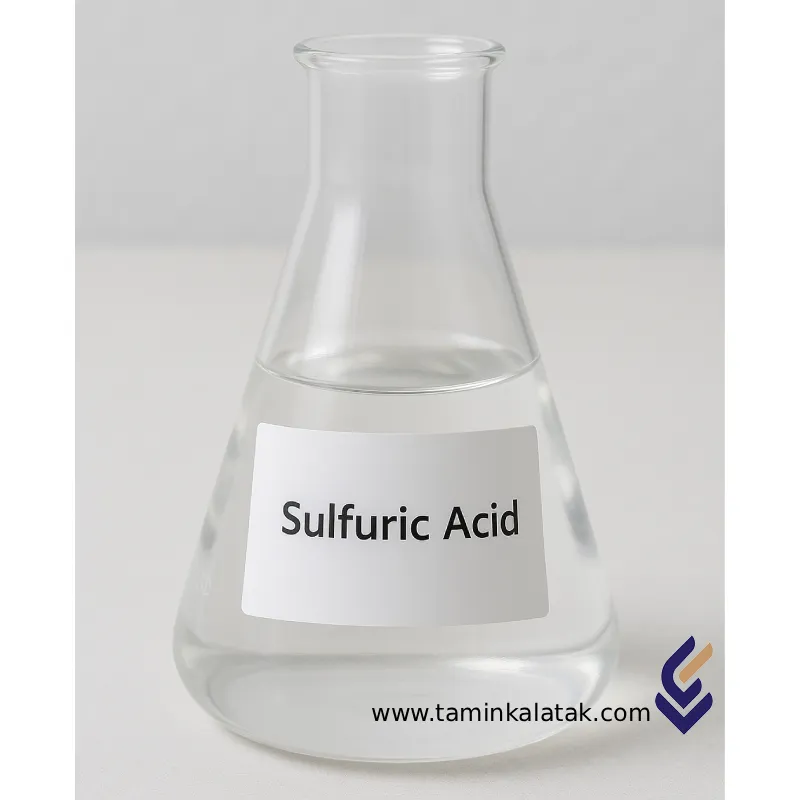
With the chemical formula H₂SO₄, it is a colorless, odorless, oily liquid that is highly corrosive and readily soluble in water, releasing a large amount of heat upon dissolution.
Chemical Structure
-
Molecular Formula: H₂SO₄
-
Structure: Consists of two hydrogen atoms (H⁺) and one sulfate ion (SO₄²⁻), in which sulfur is centrally bonded to four oxygen atoms.
-
Type of Bond: Both covalent and ionic, depending on the solvent environment.
-
In aqueous solution, sulfuric acid fully dissociates, releasing two protons (H⁺).
Physical and Chemical Properties
| Property | Value / Description |
|---|---|
| Physical State | Clear, oily, colorless liquid |
| Density (at 98%) | ~1.84 g/cm³ |
| Boiling Point | 337 °C |
| Freezing Point | 10.4 °C |
| Solubility in Water | Very high (highly exothermic and dangerous) |
| pH (1% solution) | < 1 (extremely acidic) |
| Corrosivity | Very high — attacks metals, skin, and fibers |
| Flash Point | None (non-flammable but a strong oxidizer) |
Major Applications of Sulfuric Acid
Chemical and Petrochemical Industries
-
Production of chemical fertilizers (phosphates, sulfates)
-
Manufacturing of phosphoric acid, sulfonation, and pigments
Battery Industry
-
Used as an electrolyte in lead-acid batteries (automotive and industrial)
Detergent and Cosmetic Industries
-
Production of surfactants, such as alkylbenzene sulfonates
Metallurgical and Mining Industries
-
Pickling of steel, and extraction of copper and zinc
Pharmaceutical and Laboratory Applications
-
Used as a catalyst and dehydrating agent in chemical synthesis
Advantages of Sulfuric Acid
-
Extremely strong acidity
-
Low cost and wide industrial availability
-
Versatile across numerous industrial processes
-
High hygroscopicity (effective drying agent)
-
Stable under proper storage conditions (in compatible containers)
Disadvantages and Limitations
-
Highly hazardous to skin, eyes, and the respiratory system
-
Exothermic reaction with water — requires great caution during dilution
-
Reacts violently with metals, bases, and combustible organic materials
-
Difficult handling and transportation — requires strict safety standards
-
Environmental risk if spilled or improperly disposed of
sulfuric acid
| Products | Chemical formula | CAS number | Grade | Solubility in water | Vapor pressure | Melting point | Density (at 20°C) | Physical appearance |
|---|---|---|---|---|---|---|---|---|
| (Sulfuric Acid) | H₂SO₄ | 7664-93-9 | Industrial, laboratory (ACS), battery grade, ultrapure grade | Completely soluble (vigorous exothermic reaction with water) | 0.001 mmHg در 25°C | 10.3°C | 1.84 g/cm³ (for 98% w/w acid) | Clear, colorless to slightly yellow, oily, and thick liquid |


