



Di Ethanol Amine
Diethanolamine (DEA) is an organic compound containing two hydroxyl (-OH) groups and one secondary amine (-NH-) group.
It belongs to the class of secondary amines and di-alcohols (dialkanolamines), exhibiting both amine and alcohol reactivity.
Due to this dual functionality, DEA acts as a weak base, emulsifier, pH stabilizer, and metal ion complexing agent in numerous industrial formulations.
Molecular Structure:
HO–CH₂–CH₂–NH–CH₂–CH₂–OH
Chemical and Physical Properties
| Property | Specification |
|---|---|
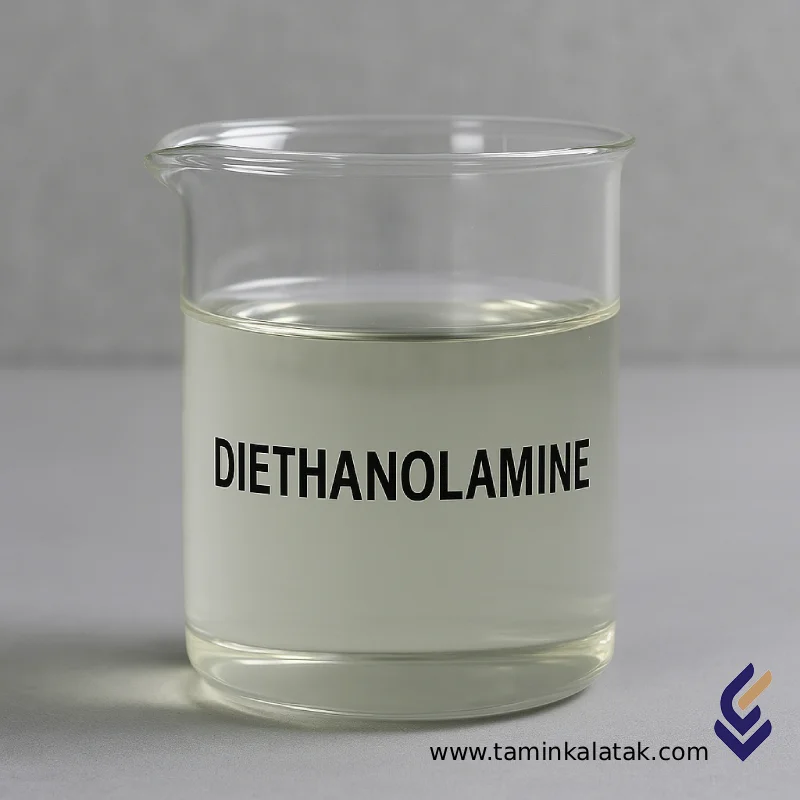
| Appearance | Colorless to pale-yellow viscous liquid |
| Odor | Mild ammonia-like odor |
| Molecular Weight | 105.14 g/mol |
| Boiling Point | ~269 °C (at atmospheric pressure) |
| Density (20–25 °C) | 1.097 g/cm³ |
| Solubility | Completely miscible with water, ethanol, and glycerol; insoluble in hydrocarbons |
| pH (1% aqueous solution) | 10.0–11.5 |
| Chemical Nature | Weak base, hygroscopic, non-volatile |
Applications of Diethanolamine (DEA)
1. Detergent, Cosmetic, and Personal Care Industries
-
Active base for the formulation of shampoos, liquid soaps, creams, and lotions
-
pH regulator and stable emulsifier in surfactant systems
2. Oil and Gas Industry
-
Used for acid gas removal (CO₂ and H₂S) in gas sweetening units
-
Acts as a corrosion inhibitor in pipeline and refinery systems
3. Agriculture and Fertilizer
-
Serves as a chelating agent in liquid fertilizers
-
Functions as a pH stabilizer in pesticide and fungicide formulations
4. Paints, Inks, and Resins
-
Co-emulsifier in water-based coatings
-
Improves viscosity, stability, and durability of paints and inks
5. Cement and Construction
-
Used as a Grinding Aid in cement production
-
Enhances workability and compressive strength of concrete under varying temperatures
Advantages
-
Multi-functional and cost-effective across various industries
-
Excellent chemical stability in alkaline media
-
High solubility in aqueous systems
-
Compatible with surfactants, oils, and alcohols
Limitations
-
Irritant to skin and eyes upon direct contact
-
Potential formation of carcinogenic nitrosamines in the presence of nitrites
-
Sensitization risk in long-term exposure, especially in leave-on cosmetic products
-
Requires dose control in food and pharmaceutical-related applications
Safety and Regulatory Information (GHS / SDS)
-
H302: Harmful if swallowed
-
H315: Causes skin irritation
-
H319: Causes serious eye irritation
-
H351: Suspected of causing cancer (IARC Group 2B – limited evidence in humans)
Storage and Handling
-
Store in tightly sealed containers made of polyethylene or stainless steel
-
Keep in a cool, dry, and well-ventilated area (10–30 °C)
-
Protect from direct sunlight, heat sources, and oxidizing agents
-
Use chemical-resistant gloves, safety goggles, and adequate ventilation during handling
Summary
Diethanolamine (DEA) is a versatile alkanolamine used extensively in detergents, gas treatment, agricultural chemicals, and resin production.
Its dual functionality as both an amine and an alcohol makes it a valuable intermediate, though it requires strict handling and dosage control due to toxicity and sensitization potential.
Applications
| Applications | , , , , , |
|---|
Di Ethanol Amine
| Products | Grade | Vapor pressure | Solubility in water | Physical appearance | Melting point | Density (at 20°C) |
|---|---|---|---|---|---|---|
| (Diethanolamine, DEA) | Industrial 85%, laboratory pure | 0.0003 mmHg at 25 °C (very low) | Completely soluble (fully miscible with water) | Colorless to light yellow viscous liquid, with an ammoniacal odor. | 28–29 °C | 1.097 g/cm³ |


